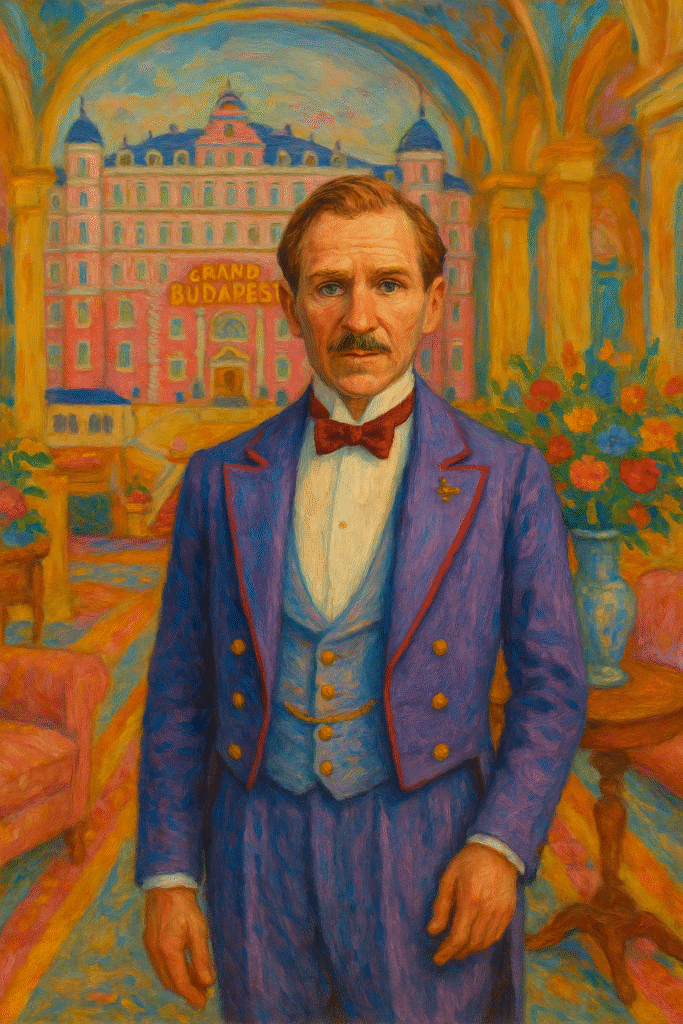

Wes Anderson’s 2014 film, _The Grand Budapest Hotel_, offers a stunning tapestry woven with a rich array of themes, aesthetics, and character intricacies. Set in the fictional Republic of Zubrowka, the narrative follows Gustave H., portrayed by Ralph Fiennes, the esteemed concierge of the titular hotel renowned for his meticulous attention to detail and unrivaled dedication to service. This article delves deeply into Gustave H.’s character, exploring the complex interplay of perfectionism, decay, and elegance that defines both him and the world around him.
In an era marked by rapid deterioration of decorum and societal values, Gustave H. stands as a symbol of refinement and dedication to the lost arts of hospitality, drawing viewers into a world of charm and nostalgia. However, it is crucial to note that beneath the surface of this elegant façade lies a profound exploration of decay, not only of physical structures but also of societal norms and morality. As we dissect Gustave’s character and his environment, we will uncover the broader implications of his commitment to perfection and the precariousness of elegance amidst a backdrop of decay.
Analysis of Perfectionism in Gustave H.’s Character
A Psychological Profile of Gustave H.
Gustave H. embodies a psychological archetype characterized by perfectionism, which manifests itself in his every action and interaction. His obsession with detail goes beyond mere professionalism; it reflects a deep-seated need for control in a chaotic world. Gustave’s perfectionism can be traced to his desire to provide not only exceptional service but also a sense of belonging to his guests, many of whom are wealthy, older patrons who value the opulence reflected in their choice of accommodation.
He believes that personal service is an art form, evident in his strict adherence to rituals and traditions that define the hotel’s operations. For instance, Gustave’s insistence on knowing each guest’s preferences and quirks demonstrates more than just good practices; it underscores his deep-seated need to create a narrative of unparalleled elegance and to maintain the hotel’s legacy. In his world, perfection is not just desirable; it is a coping mechanism against the unpredictability of life, highlighted later by the chaos that ensues through the film’s plot.
However, Gustave’s perfectionism also has sinister implications. It pushes him into precarious situations, veering into the realm of obsession. When his privileged life is threatened by the machinations surrounding the inheritance of Madame D., this obsession becomes a double-edged sword—while it may bring to light his graceful capabilities, it simultaneously reveals his vulnerability and ultimate isolation in both social and personal realms.
The Fight Against Time
As the narrative unfolds, Gustave’s dire attempts to maintain the hotel’s grandeur act as metaphors for the broader struggle against time and decay. The Grand Budapest Hotel itself serves as an allegory for the transient nature of beauty and human life, highlighting Gustave’s frantic battle against the inevitable decline surrounding him. He clings desperately to the ideals of art and elegance as he attempts to safeguard his world against the encroaching darkness of the outside world.
Exploration of Decay vs. Elegance within the Film’s Context
Aesthetic Contrast
The richly stylized world of _The Grand Budapest Hotel_ is an elaborate visual feast that captures both the elegance of pre-war grandeur and the stark realities of decay. Wes Anderson’s use of color, symmetry, and meticulous set design craft a landscape that immerses viewers in an enchanting yet unsettling vision of the past.
Within this context, the juxtaposition of decay against elegance becomes apparent through various cinematic techniques. One of the most striking uses of color reflects this dichotomy—vivid pinks, purples, and golds epitomize luxury and refinement, while darker tones expose the undercurrents of moral decay and societal collapse. The film frequently oscillates between these two extremes, symbolizing the volatility of societal structures and the fragility of affluence.
The Symbolism of the Hotel
The Grand Budapest Hotel itself embodies the intersection of decay and elegance. Once a bustling hub of activity and charm, the hotel now stands at the precipice of decline. This architectural refuge bears witness to a changing world, filled with the ghosts of its former glory and the inevitability of its demise. Gustave’s relentless efforts to uphold the standards of the hotel highlight the tragic irony of his existence—the more he struggles to preserve elegance, the more evident the decay becomes.
Moreover, the hotel is not just a backdrop, but rather a character in its own right, echoing themes of nostalgia and loss. Gustave and the hotel’s fate are inextricably linked; as he fights to maintain the hotel’s honor, he simultaneously grapples with the fading beauty of a world that can no longer sustain itself. This intertwining narrative echoes the broader societal reflections on the fleeting nature of success and beauty in contemporary society.
Conclusion and Reflection on Cultural Impact
Gustave H.’s character in _The Grand Budapest Hotel_ serves not only as an embodiment of perfectionism but also as a profound commentary on the state of modern aesthetics and class. His unwavering pursuit of excellence amidst chaos invites audiences to consider the costs of devotion to elegance in a society beset by issues of class struggle and moral decay. The film’s lavish aesthetics stand in stark contrast to the dark realities of war and societal collapse, probing the question of whether the quest for perfection and elegance ultimately leads to fulfillment or despair.
As viewers delve into Gustave’s life, they are forced to confront their perceptions of beauty, the fragility of social structures, and the societal implications that follow. In a world that increasingly values appearances and material success, _The Grand Budapest Hotel_ acts as a cautionary tale, urging us to reflect on what it truly means to uphold elegance in the face of inevitable decay.
Ultimately, Gustave H.’s journey is emblematic of a broader societal narrative—one that resonates as much today as it did in the period of the film. By reflecting on the harmony and discord of elegance and decay, Wes Anderson prompts viewers to navigate their own understanding of beauty, status, and the transient nature of our own lives.
FAQ Section
What are the main themes explored in _The Grand Budapest Hotel_?
The film explores themes of perfectionism, decay, class struggle, nostalgia, and the fragility of beauty against a backdrop of societal turmoil.
How does Gustave H. represent perfectionism?
Gustave H. exemplifies perfectionism through his meticulous attention to detail and commitment to providing unparalleled service, reflecting a deep-seated need for control and order in a chaotic world.
What role does the hotel play in the narrative?
The Grand Budapest Hotel represents both a once-great symbol of elegance and a victim of decay, serving as an allegory for the transient nature of societal values and beauty.
How does the film comment on contemporary society?
The film mirrors contemporary societal issues regarding aesthetics and class, prompting viewers to reflect on the significance of beauty and status in a world increasingly defined by struggle and decay.
Why is _The Grand Budapest Hotel_ considered a cultural critique?
The film critiques the notion of refinement and class by juxtaposing elegance with decay, analyzing how societal structures often exalt appearances while masking underlying turmoil.
This exploration of Gustave H. and the film’s rich thematic landscape encapsulates the enduring impact of _The Grand Budapest Hotel_, making it a classic narrative worthy of deep reflection and appreciation.