
Introduction
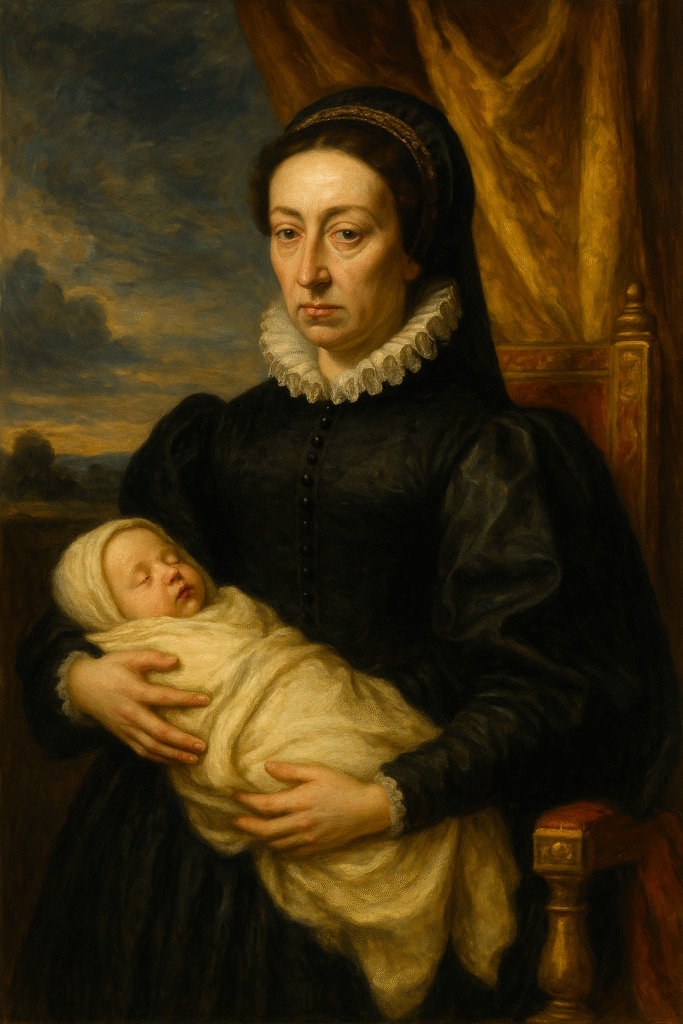
Catherine de’ Medici remains one of history’s most debated figures. In this piece we examine the psychology of political motherhood as depicted in the Starz series The Serpent Queen, and we compare the show’s choices with historical records and psychological frameworks such as attachment theory, trauma studies, and impression management. Along the way, we flag what the series gets right, where it takes liberties, and why maternal identity mattered to power in early modern Europe.
To deepen this analysis we bring in comparative historical examples, practical leadership takeaways, and interpretive steps for readers who want to use the “psychology of political motherhood” as a heuristic without committing to clinical diagnoses. We also map how cinematic choices — interior monologues, concentrated scenes of intimacy, and symbolic staging — shape modern viewers’ understanding of maternal politics.
Psychology of Political Motherhood
- The Serpent Queen frames many political acts as maternal strategies: securing heirs, shaping public image, and using emotional labor as political capital.
- Applying the psychology of political motherhood (attachment, trauma response, social identity) illuminates Catherine’s hypervigilance, ceremonial theater, and willingness to make brutal dynastic choices.
- While the show compresses timelines and invents interior monologue, its maternal-throughline reflects documented pressures on queen mothers in the House of Valois and the French Wars of Religion.
Additional takeaways:
- Maternal roles often create both leverage and vulnerability: a queen mother can credibly claim familial legitimacy while simultaneously becoming a lightning rod for blame when dynastic fortunes fail.
- The psychological lens helps unpack why emotional labor (mourning rituals, hosting, gift-giving) functioned as statecraft.
- For contemporary viewers and leaders, recognizing the performative and strategic dimensions of caregiving clarifies how private identities intersect with public responsibilities.
Who was Catherine de’ Medici? A brief biography (Catherine de Medici influence)
- Born 1519 in Florence to the Medici; died 1589 in Blois.
- Married Henry of Valois (later Henry II) as a dynastic alliance; mothered ten children, including three kings (Francis II, Charles IX, Henry III) — thus a literal “mother of kings.”
- Her political life unfolded amid the French Wars of Religion (Catholics vs. Huguenots) and intense noble factionalism (Guise, Bourbon, Montmorency).
- Primary sources: Catherine’s letters and state papers; major modern syntheses include works by R. J. Knecht and Leonie Frieda.
Historical context and a short case study:
Catherine’s regency after Henry II’s death in 1559 forced her into a formal, public role at the same moment religious tensions intensified. A clear episode illustrating the psychology of political motherhood is her involvement in arranging marriages — most famously the wedding of her daughter Marguerite (Margaret of Valois) to Henry of Navarre. The marriage was designed to reconcile Catholics and Huguenots; instead it became entangled with the St. Bartholomew’s Day Massacre (1572). Whether Catherine directly ordered the massacre remains debated, but the event exemplifies how maternal strategies (using marriages to secure peace and heirs) could produce catastrophic political backlash.
How The Serpent Queen portrays the psychology of political motherhood
The series makes three deliberate choices that foreground maternal politics:
- Interior access: the show gives Catherine private monologues and imagined conversations to render motive legible.
- Gendered framing: her political actions are repeatedly framed as responses to being a foreign queen, wife, and mother in a masculinized court.
- Narrative condensation: decades of maneuvering are compressed so maternal strategy reads as a coherent throughline.
These choices enhance empathy and narrative clarity, though they sometimes simplify broader institutional forces.
Expanded analysis:
By giving viewers a sustained internal perspective, the show invites us to interpret ritual and cruelty as calculated caregiving. This foregrounding is useful for understanding the psychology of political motherhood but it also risks teleology — reading every political maneuver as reducible to maternal instinct. In reality, Catherine navigated overlapping incentives: personal survival, family continuity, factional compromise, and state-building.
Psychological frameworks for the psychology of political motherhood
To interpret Catherine’s behavior (as shown on screen and in sources) we apply accessible frameworks:
- Attachment theory: early instability and exile may have predisposed Catherine toward securing close attachments via family and patronage.
- Trauma and complex grief: repeated personal and political losses plausibly led to hypervigilance and control strategies.
- Social identity & role theory: “queen” and “mother” roles supplied legitimation and a platform for influence.
- Impression management (Goffman): court ritual, spectacle, and fashion were tools to shape perceptions and mask vulnerability.
- Maternal ambivalence: care and instrumental calculation coexisted; this concept helps explain morally fraught choices without moralizing.
Step-by-step interpretive guide (how to apply these frameworks):
- Identify the role demands: note when Catherine operates as a mother, regent, or foreigner.
- Map triggers: link personal losses or public crises to shifts in behavior (e.g., increased surveillance after an assassination attempt).
- Separate motive from strategy: ask whether a move is expressive (mourning, display) or instrumental (alliances, patronage).
- Contextualize: compare actions to contemporaneous norms for royal women to avoid anachronistic readings.
- Evaluate outcomes: assess whether maternal strategies produced intended dynastic stability or unintended destabilization.
Key scenes illustrating the psychology of political motherhood (The Serpent Queen analysis)
- S1E1 — Childbirth staged as dynastic labor: maternity presented as political currency.
- S1E2 — Instrumental intimacy: Catherine uses affection and proximity to influence court actors.
- S1E4 — Loss and control: a family death catalyzes surveillance and preemptive political moves.
- S1E6 — Public image work: ceremonies and spectacle reframe threats into legitimacy-building performances.
- S1E8 — Moral calculus: the finale dramatizes maternal ambivalence where sacrifice and survival collide.
Each scene can be read alongside historical case studies. For instance, the staging of childbirth echoes the documented importance of producing male heirs — a political event that involved dynastic nurses, medical attendants, and public announcements. Similarly, Catherine’s use of court spectacle mirrors her historical patronage of fashion, masques, and the arts to assert moral authority.
Historical accuracy: The Serpent Queen vs. the real Catherine de’ Medici
What the show gets right:
- The centrality of producing heirs and arranging marriages to secure dynastic continuity.
- Use of court spectacle, patronage, and marriage policy as instruments of influence.
- The gendered limits on formal power that pushed Catherine to exercise soft power.
Dramatic liberties:
- Invented interiority and compressed timelines for narrative economy.
- Simplified factional complexity during the French Wars of Religion.
- Occasional amplification of cruelty or sympathy for dramatic effect.
Comparative note:
Contrast Catherine with another politically active mother, Isabella of Castile: Isabella exercised more formal authority as a monarch in her own right, while Catherine’s power was mediated through her children and courtcraft. This contrast shows two models of political motherhood — the sovereign-mother who rules directly and the queen-mother who wields influence via kinship and ceremony.
Modern lessons — applying the psychology of political motherhood to leadership
- Emotional labor is political labor: managing perceptions and interpersonal ties is legitimate influence work.
- Protective calculus: ostensibly ruthless choices often arise from survival-oriented risk management.
- Gendered expectations persist: modern female leaders still face questions about family and sacrifice; Catherine’s case prompts empathy and critique.
Actionable tips and recommendations for leaders inspired by this lens:
- Deliberately curate ritual: invest time in symbolic actions that communicate stability (e.g., public acknowledgements, consistent ceremonies).
- Build distributed patronage: create a network of reciprocal obligations that produces loyalty without centralizing risk.
- Practice controlled vulnerability: selectively disclose personal stakes to humanize leadership but avoid undermining authority.
- Reframe criticism: convert familial expectations into policy narratives (e.g., “I care for our future generations” as a policy anchor).
Where to watch and read — The Serpent Queen & Catherine de’ Medici (resources)
- Where to watch The Serpent Queen TV series: Starz (check local platform availability).
- Recommended reading: Leonie Frieda, Catherine de Medici: Renaissance Queen of France; R. J. Knecht, Catherine de’ Medici: A Life for scholarly depth.
Primary sources and archival suggestions:
- Edited collections of Catherine’s letters and state papers give firsthand insight into administrative concerns and emotional registers.
- Diplomatic correspondence (Ambassadors’ reports) offers external perspectives on how Catherine’s maternal politics appeared to foreign courts.
Visual and editorial suggestions (for publishing teams)
- Use stills that contrast private maternal moments with public ceremonies (S1E1 childbirth close-up vs S1E6 procession).
- Pull quotes: “Motherhood was both Catherine’s armor and her ledger.”
- Accessibility: include detailed captions, transcripts for clips, and descriptive alt text (e.g., “Catherine holds her infant, face in shadow, cloth of state behind her”).
Editorial tip: pair each visual with a short historical note (two or three sentences) to ground dramatized images in documented events.
Conclusion — psychology of political motherhood as a lens on Catherine de’ Medici
The psychology of political motherhood is a productive lens: it helps explain Catherine de’ Medici’s combination of tenderness, calculation, and theater without reducing her to a stereotype. The Serpent Queen translates these dynamics for modern audiences; meanwhile, historians’ nuance and primary sources remain essential for a full picture. Ultimately, Catherine’s life prompts us to consider how maternal roles have shaped political strategy across eras.
Future scholarship will likely deepen interdisciplinary approaches, pairing cognitive psychology with diplomatic history and gender studies to refine how we read maternal influence in political contexts.
FAQ
Q: Does this article diagnose Catherine de’ Medici?
A: No. We apply psychological frameworks as heuristics, explicitly avoiding retroactive clinical diagnoses.
Q: Is The Serpent Queen historically accurate?
A: It is historical fiction: accurate on pressures and broad strategies but uses invented interiority and compressed timelines.
Q: Which biographies can I read next?
A: Start with Leonie Frieda’s book and R. J. Knecht’s biography; consult Catherine’s edited letters for primary evidence.
Q: Where can I watch the series?
A: The series streams on Starz; availability varies by region and platform.
Q: Can the psychology of political motherhood be applied to contemporary leaders?
A: Yes. The framework highlights emotional labor, narrative management, and role negotiation relevant to modern executives and politicians.
Q: What ethical cautions should readers keep in mind when applying modern psychology to historical figures?
A: Avoid clinical diagnoses, respect historical context, and use frameworks as interpretive tools rather than definitive explanations.
Q: Are there classroom resources to teach this topic?
A: Combine episodes or clips with primary source readings (letters, ambassadorial reports), a short primer on attachment theory, and a comparative case study (e.g., Isabella of Castile). Use a step-by-step worksheet that guides students through the interpretive steps outlined above.
If you found this analysis useful, subscribe to Screenpsyche for more TV-psychology crossovers. Share your thoughts: which scene felt most driven by maternal strategy to you?