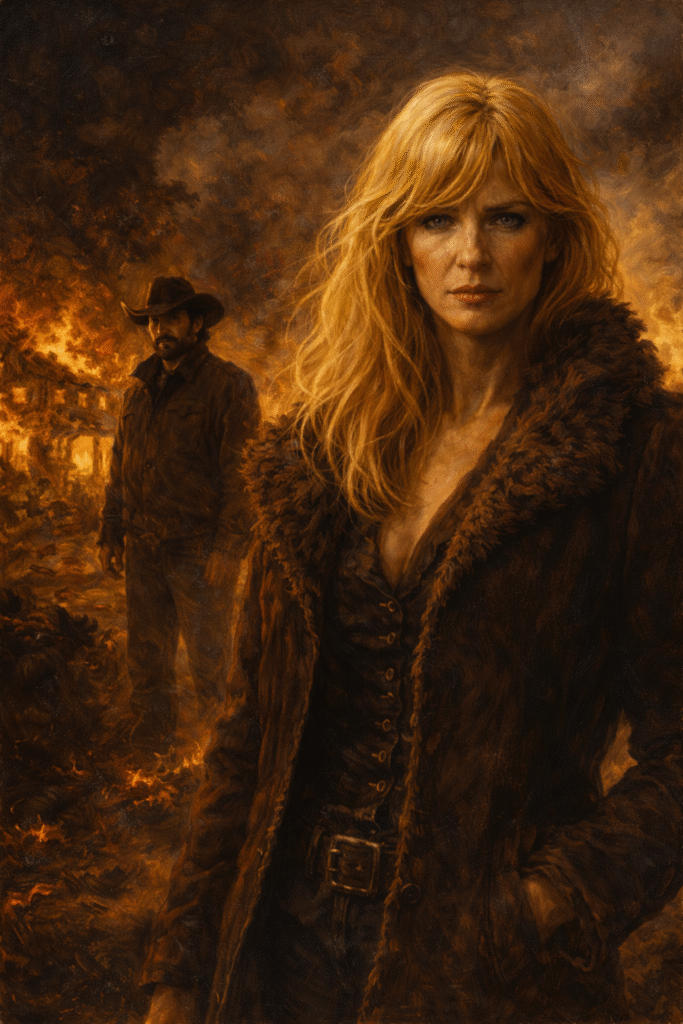

Beth Dutton’s rage and loyalty are not random personality quirks; they are trauma-forged survival strategies. Shaped by childhood loss, shame, and betrayal, her fury becomes armor, her devotion a shield against abandonment, creating a fierce, self-destructive woman driven by a terrified inner child—and giving viewers a powerful way to understand their own anger and attachment patterns.
Key Takeaways
- Beth Dutton’s rage and loyalty grow from deep childhood wounds, unresolved shame, and a constant fear of abandonment.
- Her anger, risk-taking, and fierce devotion to family and Rip are trauma-driven defenses, not random cruelty or simple “badass” behavior.
- Viewing Beth through a trauma-informed, mental health lens helps us recognize our own protective patterns with more compassion and curiosity.
Introduction: Why Beth Dutton’s Rage and Loyalty Grip Us
Beth Dutton storms through Yellowstone like a wildfire: vicious one moment, heartbreakingly tender the next. Viewers search for “Beth Dutton rage and loyalty” because she embodies a paradox—she is both terrifying and strangely relatable.
Beneath the designer suits, cigarette smoke, and verbal shrapnel is a wounded inner child. Beth’s adult armor—her cruelty, devotion, and refusal to back down—makes far more sense when we see it as a trauma-built survival system rather than pure villainy or simple “badassery.” If you want an even broader character breakdown, you can also read our companion piece on Beth Dutton rage, loyalty, and survival, which zooms out to her larger role in the series.
Brief Character & Context Overview
Beth is the only daughter of John Dutton, patriarch of the Yellowstone ranch. She’s a high-powered financier who weaponizes business deals the way cowboys use guns. Key relationships shape her psychology:
- John Dutton (father): The sun she orbits. His approval feels like oxygen and redemption.
- Jamie (adopted brother): The source of one of her deepest betrayals and greatest hatred.
- Kayce (brother): Someone she loves fiercely but keeps at emotional arm’s length.
- Rip Wheeler (partner): The one person she fully claims as “hers,” a safe harbor she still manages to storm.
Crucial backstory and childhood trauma beats include:
- Her mother’s death on a ride where Beth blamed herself.
- A cold, demanding family culture where weakness is unacceptable.
- Jamie arranging a secret abortion when Beth is a teen—at a clinic that sterilizes her without her informed consent.
- Years of high-risk behavior, heavy drinking, violent confrontations, and near-death scenarios.
Within this context, her rage and loyalty are not contradictions but two sides of the same survival coin.
The Wounded Child: Early Trauma, Attachment, and Shame
Beth’s psychological story starts long before she becomes the sharp-tongued executive we meet on-screen. From a trauma-informed perspective, her childhood shapes the nervous system that later fuels her explosive anger and cling-to-the-death loyalty.
The Mother Wound and the Birth of Shame
Beth’s mother is harsh and demanding, but also the primary feminine figure she tries to please. When her mother dies in a riding accident that Beth blames on herself, a few powerful beliefs likely crystalize inside her:
- “I am dangerous to the people I love.”
- “If I make a mistake, someone dies.”
- “Love and catastrophe are intertwined.”
This is the seed of toxic shame—the sense not just that she did something bad, but that she is bad. From a trauma-informed lens, shame becomes her core wound and colors every later relationship.
Attachment in a House of Steel
The Dutton household is not gentle. Vulnerability is treated like a liability. John loves his children, but his love often comes through expectations and ultimatums.
For a child already carrying shame, growing up in a “be tough or be eaten” environment teaches a painful lesson:
If you show softness, you will be hurt—or blamed.
Beth internalizes this. Instead of seeking comfort, she armors up. Psychologists would describe this as an insecure attachment pattern: she still longs for closeness, but expects pain, betrayal, or abandonment when she lets anyone in.
Jamie’s Betrayal and Deepening of Shame
As a teen, Beth becomes pregnant by Rip. Terrified of her father’s reaction, she turns to Jamie. He chooses to “solve” the problem at a clinic that sterilizes her without her informed consent.
Psychologically, this moment fuses several wounds:
- Body betrayal: Her reproductive capacity is taken from her.
- Relational betrayal: It’s done by a brother she should be able to trust.
- Identity rupture: Motherhood is removed as a possibility; she sees herself as permanently broken.
Beth’s later hatred toward Jamie is not just about revenge. It’s grief, shame, and a sense of being irreparably damaged—projected outward to avoid drowning in it. Her secrecy around this reproductive trauma mirrors what research on interpersonal trauma and abuse tells us: survivors often hide their pain to protect themselves from pity, judgment, or disbelief.
Rage as a Survival Strategy: Anger, Control, and Emotional Armor
Beth’s rage is legendary: the office meltdowns, bar brawls, verbal eviscerations, and scorched-earth tactics. A trauma-informed view sees something beyond cruelty: rage as armor and a learned trauma response.
Anger as Protection Against Vulnerability
When someone gets close—emotionally or psychologically—Beth often responds with:
- Sarcasm and humiliating insults
- Explosive, disproportionate responses
- “Burn it all down” threats
If vulnerability has historically led to shame, loss, or betrayal, then anger feels safer than sadness or fear. Rage flips the script from “I am powerless and bad” to “I am dangerous and in control.”
This is a defensive strategy—protecting a fragile inner self by keeping others off-balance or far away. In trauma psychology, this lines up with a dominant fight response in the fight/flight/freeze/fawn toolkit our nervous system uses to survive overwhelming stress.
Control as an Antidote to Helplessness
Beth’s business persona is all about control: hostile takeovers, calculated humiliation of opponents, and a refusal to lose. Helplessness echoes those early experiences where she could not save her mother or protect her body.
So she leans into fight mode:
- Strike first before they can hurt you.
- Never show weakness in a negotiation or relationship.
- If cornered, go nuclear.
It is a survival algorithm that once kept her safe, now playing out in boardrooms and relationships alike. For a deeper dive into these kinds of survival strategies in TV characters, see our analysis of trauma and control in The Shining.
Loyalty, Love, and Terrifying Devotion: Hyper-Attachment to Family and Rip
For all her rage, Beth is also fiercely, almost frighteningly loyal. Her devotion to John and Rip, and even her complicated care for Kayce, show the other side of her trauma: hyper-attachment, a kind of “I’d rather burn everything than be left” loyalty.
Devotion to John: Love Entangled with Duty and Guilt
Beth’s bond with John is part love, part penance. After her mother’s death, she seems to carry an unspoken promise: protect her father and the Yellowstone ranch at all costs. This plays out as:
- Destroying threats to the land, the brand, and the family legacy.
- Sacrificing her own safety, reputation, and relationships to serve his vision.
- Accepting emotional distance or harshness from John as the price of staying loyal.
Her loyalty is less a free choice and more a lifelong attempt to atone. In attachment terms, her sense of worth is glued to being useful and indispensable to her father and to Yellowstone itself.
Rip as Safe Harbor—and Target
With Rip, Beth allows more softness than she does with anyone else. Yet she also tests him relentlessly, pushes him away, and sometimes drenches their intimacy in cruelty.
This is classic trauma logic:
- “If I scare you away now, it will hurt less than if you leave later.”
- “If you stay through my worst, maybe I’m not unlovable after all.”
Her possessiveness—”He’s mine”—is not just romantic intensity. It is a terrified child clinging to the one person who has consistently stayed, an anxious attachment pattern wrapped in barbed wire.
When Loyalty Becomes Self-Destructive
Hyper-loyalty can look heroic, but there is a cost:
- She accepts emotional pain as the price of devotion.
- She demands absolute allegiance in return and punishes perceived betrayal brutally.
- She risks everything—career, legal safety, even life—for people she loves.
Loyalty, then, is both her superpower and a way she reenacts old patterns of sacrificing herself to feel worthy of love.
The Survival Instinct: Fight, Risk-Taking, and Self-Destruction
Beth is constantly flirting with death—physically, emotionally, and socially. This includes:
- Walking into violent confrontations without backup.
- Heavy drinking and substance use as emotional anesthesia.
- Business risks that could ruin her.
From a trauma-informed perspective, this reflects chronic fight mode, mixed with emotional numbness and a distorted sense of what “normal” risk feels like.
Living on the Edge to Feel Alive
For some trauma survivors, calm feels foreign or even unsafe. High intensity—conflict, danger, chaos—matches their internal state. Beth gravitates toward that edge.
Risk becomes a coping mechanism:
- If she wins, she proves she is powerful, not helpless.
- If she loses, it confirms her belief she is already ruined and unworthy.
In either case, the stakes keep her from sitting quietly with grief, shame, or loneliness.
Self-Destruction as Punishment
Beth often treats herself as if she doesn’t deserve safety or care. That can show up as:
- Not protecting herself in dangerous scenarios.
- Sabotaging moments of happiness.
- Using alcohol and violence to punish her own body.
On some level, she is still the girl who “killed” her mother and “failed” to protect her future. Self-destruction is the shadow of that belief.
Beth and the Feminine Archetype: The Dark Protector and the Cost of Being “Too Strong”
Culturally, Beth resonates because she embodies several powerful archetypes:
- The wounded warrior: scarred but still fighting.
- The dark protector: vicious to enemies, tender to a chosen few.
- The avenging child: punishing anyone who mirrors the injustice she endured.
Audiences are drawn to her because she gives form to parts of ourselves we usually hide—our rage at unfairness, our hunger to protect what we love, our suspicion that we are “too much” and “too broken.”
At the same time, she reflects a cultural story about “strong women”: that to be powerful, you must be invulnerable, cruel, and endlessly self-sacrificing. Beth shows the emotional cost of that myth. Strength without softness becomes isolation. Power without self-compassion becomes self-destruction.
Table: Beth’s Coping Patterns – Protective Function vs. Emotional Cost
| Pattern | Protective Function | Emotional / Relational Cost |
|---|---|---|
| Explosive rage and insults | Keeps others at a distance; prevents vulnerability | Loneliness, broken trust, fear from loved ones |
| Hyper-loyalty to family | Maintains belonging and purpose | Self-neglect, accepting harmful dynamics |
| Risk-taking and confrontation | Creates sense of control and power | Physical danger, legal/financial fallout |
| Emotional walls with Rip | Protects against abandonment | Missed intimacy, repeated testing of the relationship |
| Secrecy around reproductive trauma | Shields her from pity and exposure of shame | Unresolved grief, self-hatred, sabotage of closeness |
Conclusion: Meeting Our Own “Inner Beth” With More Gentleness
Beth Dutton is both the nightmare and the heart of Yellowstone: a woman whose rage can level a room and whose loyalty can move us to tears. When we look at her through a trauma-informed psychological lens, we see not a monster, but a younger self who learned to survive in brutal ways and never got the chance to update the script.
Her story reminds us how easily childhood trauma, toxic shame, and insecure attachment can shape adult behavior: anger becomes armor, loyalty becomes self-erasure, risk becomes a way to feel alive. Many of us won’t torch boardrooms or start bar fights, but we may still recognize quieter versions of Beth’s coping strategies in our own lives—sarcasm instead of honesty, over-giving instead of setting boundaries, staying busy instead of feeling grief.
Understanding Beth Dutton’s rage and loyalty through this trauma-informed, psychological character study also highlights a path toward change. If we can identify the protective logic behind our own anger, avoidance, or hyper-loyalty—what each reaction is trying to shield us from—we gain the power to choose different responses. Therapy, support groups, and psychoeducation about trauma and attachment can help us replace old survival strategies with safer, more flexible ways of relating.
If you notice a bit of your own “inner Beth”—the part that would rather push people away than risk being left—it doesn’t mean you’re doomed to the same self-destruction. It can be an invitation to get curious: What is this rage protecting? What is this loyalty trying to secure? What would support or therapy make possible instead? For more tools on reading characters this way (and gently applying those insights to yourself), explore our other media psychology and TV character analyses.
We may not live on a ranch or wage corporate war, but understanding Beth’s inner world can help us approach our own—with a little less judgment, and a little more care. In that sense, Beth Dutton’s rage and loyalty are not just character traits to watch; they are mirrors that reflect how trauma, shame, and attachment shape all of us, and how healing can begin when we finally see the patterns underneath.
Frequently Asked Questions
Why are Beth Dutton’s rage and loyalty so intense in Yellowstone?
Beth Dutton’s rage and loyalty are rooted in unresolved childhood trauma, including her mother’s death, emotional neglect, and deep shame. These experiences wired her to see the world as unsafe, turning anger into armor and extreme loyalty into a way to avoid abandonment and betrayal.
How does childhood trauma explain Beth Dutton’s loyalty to her family?
Beth’s early losses and emotional wounds create an insecure attachment to her father and family. She clings to them with hyper-loyalty while lashing out at any perceived threat. Her rage protects her from vulnerability, while her devotion keeps her connected to the only people she fears losing.
In what ways do shame and secrecy fuel Beth Dutton’s loyalty to Rip?
Beth’s secret abortion and resulting infertility, tied to Jamie’s betrayal, burden her with profound shame. With Rip, she channels this into fierce devotion, seeing him as the one person who truly chooses her. Her rage defends that bond, making her violently protective and terrified of losing him.
Why does Beth Dutton use rage as emotional armor instead of showing vulnerability?
Vulnerability once led Beth to pain, judgment, and abandonment, so her nervous system treats softness as dangerous. Rage and intimidation keep others at a distance and give her a sense of control. By staying angry, she avoids feeling the grief, guilt, and terror of being unlovable.
How can understanding Beth Dutton’s trauma responses help viewers?
Recognizing Beth’s behavior stems from trauma, not pure malice, invites viewers to consider where they also use anger or control to feel safe. Her character highlights how protective patterns can be both understandable and self-destructive, encouraging more self-awareness and compassion. For additional psychoeducational context on trauma and coping, you can explore resources from the U.S. National Center for PTSD or similar reputable organizations.
Further reading & authoritative sources
From screenpsyhce
- understanding trauma bond dynamics — Explore how intense emotional attachments can form in dangerous or toxic relationships.
Authoritative sources
- adverse childhood experiences (ACEs) — Learn how early trauma and family dysfunction can shape long-term health and behavioral patterns.