
Spoiler note: this analysis discusses major beats from Breaking Bad, BoJack Horseman, The Godfather, and others. If you’re spoiler-averse, skim the psychological framework and filmmaking sections first.
Film Characters Haunted by What They Could Have Been: Definition
When we say “film characters haunted by what they could have been,” we mean characters whose choices, inaction, or latent talents create an ongoing, often painful sense of an unrealized self. In short, they are haunted by potential — not merely regret. This anxiety can be about a better self lost, or about a darker self they fear becoming. Either way, this interior conflict drives stakes and emotion in memorable narratives.
That haunting can take multiple narrative forms: a character who longs for a path not taken, a figure who actively resists an aspect of themselves, or a person whose attempts to realize potential yield ruin. The phrase “haunted by what they could have been” centers on the psychological pressure of possibility — a living ghost of alternate lives that colors memory, decision-making, and relationships.
Psychology: Counterfactual Thinking, Regret, and Impostor Feelings
Psychologically, the theme maps to well-documented processes. First, counterfactual thinking (the “if onlys”) intensifies identity narratives and fuels rumination. Social psychologist Neal J. Roese’s foundational work (1997) shows that upward counterfactuals — imaginations of better outcomes — can motivate change but also deepen disappointment when the imagined self is persistently unreachable.
Second, regret for inaction often lasts longer than regret for action, which helps explain why many characters fixate on doors they never opened. This is especially true in arcs involving midlife crises or career stagnation, where the weight of unpursued opportunities compounds over time.
Third, impostor-like feelings — fearing you don’t deserve a better self — can make a character avoid growth. Impostor dynamics can combine with perfectionism and social comparison to keep characters stuck, sometimes leading them toward self-sabotage rather than transformation.
These processes are not only psychological constructs but also dramatic engines. They create believable internal conflict that writers can externalize through behavior, plot choices, and cinematic technique.
Film Characters Haunted by What They Could Have Been: 9 Case Studies
Below are nine film and TV characters who exemplify different permutations of being haunted by potential. Each vignette is short, focused, and links back to the theme. For writers and analysts, each case also offers a micro-case study in how the haunting is constructed and shown on screen.
1) Walter White (Breaking Bad) — Seduced and Terrified by Dark Potential
- Brief bio: A downtrodden chemistry teacher who discovers an aptitude for criminal enterprise.
- Key scene: “I am the one who knocks.” (Season 4)
- Why he fits: Walter’s arc inverts the wasted-potential trope; he both revels in and fears the dangerous version of himself. The haunting here is the lure of competence turned corrupt.
- Case note: Show how incremental choices (first cook, first lie) accumulate into a transformed identity; the show uses costume, composition, and escalating moral compromises to map the psychological shift.
2) BoJack Horseman — Wasted Promise and Self-Sabotage
- Brief bio: Former sitcom star who alternates longing for redemption with self-destruction.
- Key scenes: Birthday episodes and repeated flashbacks.
- Why he fits: BoJack mourns a kinder, more talented self. His fear of becoming the person he already is results in avoidance and cyclical harm.
- Case note: Animation allows literal visual metaphors for inner life; writers use surreal interludes to show alternative lives BoJack imagines.
3) Michael Corleone (The Godfather) — Moral Inheritance and Inevitable Power
- Brief bio: A reluctant outsider who becomes the family head.
- Key scene: The baptism montage in The Godfather.
- Why he fits: Michael fears and becomes the potential of absolute authority; the narrative interrogates whether the potential corrupts or reveals an existing predisposition.
- Case note: Coppola juxtaposes private vows and public violence to suggest potential isn’t discovered — it’s extracted by circumstances.
4) Anakin Skywalker (Star Wars) — The Fall of a Tragic Potential
- Brief bio: Gifted Jedi whose fear of loss and attraction to power lead to catastrophe.
- Key scene: Mustafar and the transformation into Darth Vader.
- Why he fits: Anakin’s dread of losing those he loves pushes him toward choices that actualize the very darkness he feared.
- Case note: Mythic tragedy tradition meets modern blockbuster; Anakin is often compared to classical tragic heroes whose flaw (fear/ambition) catalyzes downfall.
5) Carrie White (Carrie) — Latent Power as Threat
- Brief bio: A bullied teen whose telekinetic potential is both a promise and a danger.
- Key scene: The prom massacre.
- Why she fits: Carrie’s story literalizes the terror of latent power turning catastrophic when combined with trauma.
- Case note: Horror externalizes inner pressure; Carrie’s telekinesis is both a metaphor for adolescence and an enactment of repressed rage.
6) Tom Ripley (The Talented Mr. Ripley) — Envy, Identity, and the Horror of No Self
- Brief bio: A chameleon who steals identity to inhabit someone else’s potential.
- Key scene: Mirror-practice and identity theft sequences.
- Why he fits: Ripley’s haunting is existential: he fears his own lack of potential and attempts to graft another’s life onto himself.
- Case note: Interior voice and close-ups create claustrophobic intimacy with Ripley’s mimicry and moral disintegration.
7) Norman Bates (Psycho) — Fragmented Potential Made Literal
- Brief bio: Motel owner with a murderous alternate personality.
- Key scene: The cellar reveal.
- Why he fits: Hitchcock externalizes a split self; Norman’s potential for violence hides inside an alternate identity, creating literal internal haunting.
- Case note: The film’s unexpected reveal reframes earlier scenes, forcing viewers to retroactively read Norman’s haunting into his behavior.
8) Marty Byrde (Ozark) — Reluctant Transformation into the Thing He Feared
- Brief bio: Financial planner forced into laundering who becomes eerily proficient.
- Key scene: Rationalizations for escalating crimes to protect family.
- Why he fits: Marty fears becoming a criminal, yet his survival-oriented competence increasingly defines him.
- Case note: Long-form streaming allows slow accrual of competence; each season maps incremental moral erosion.
9) Lester Burnham (American Beauty) — Midlife Regret and Radical Reclaiming
- Brief bio: A man who breaks away from suburban passivity late in life.
- Key scene: Lester’s fantasies and final monologue.
- Why he fits: Lester is haunted by a life not lived; his late embrace of potential complicates whether liberation or avoidance won the day.
- Case note: Sam Mendes uses satirical suburban imagery to show how societal expectations suppress potential until crisis erupts.
Cinematic Techniques: Showing Characters Haunted by Potential
Directors and writers externalize counterfactual interiority using:
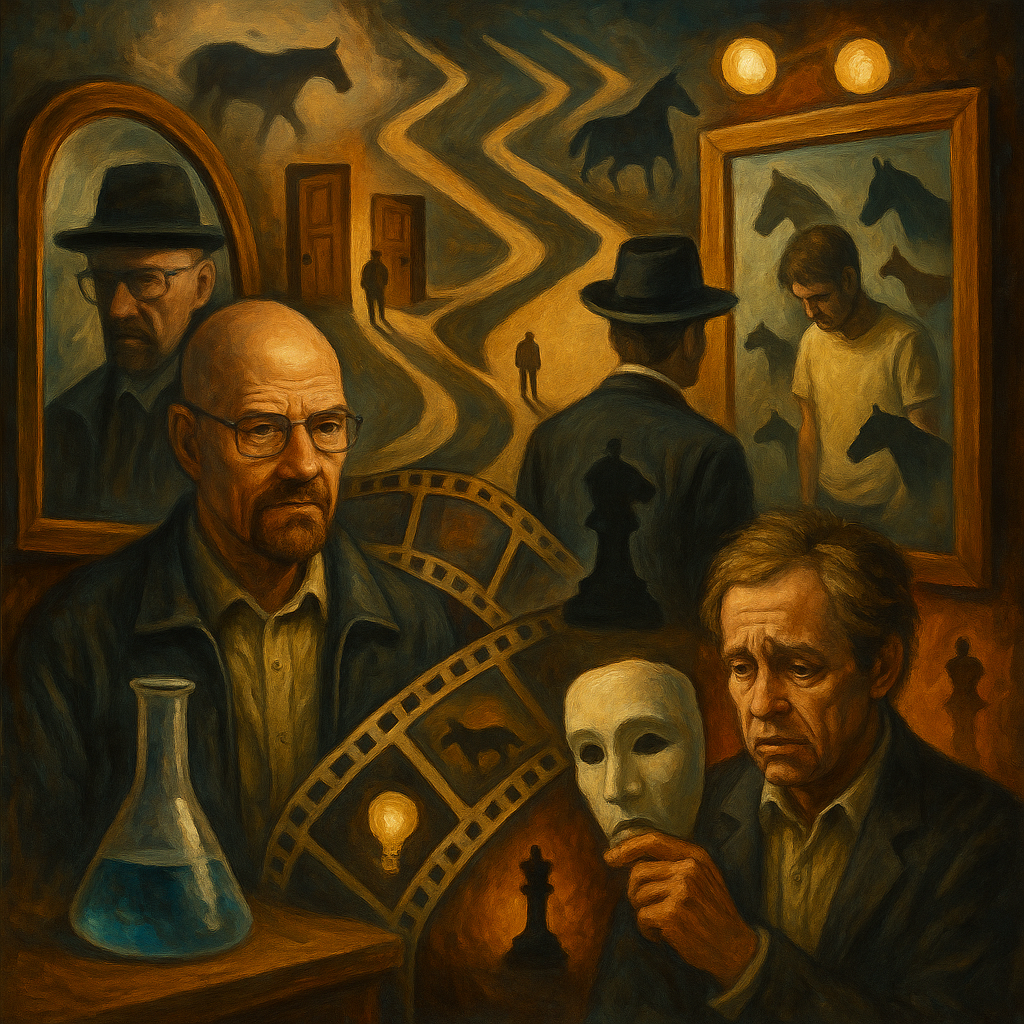
- Visual doubles (mirrors, reflections) and split frames. Mirrors can show the character confronting the self they might have been; reflective surfaces are cheap, immediate signifiers of internal multiplicity.
- Montage and parallel editing to contrast “what is” with “what might have been” (e.g., Michael’s baptism). Montage can present a fantasy life as a series of brief, immaculate images that haunt the present.
- Color and lighting shifts to signal temptation versus regret. A palette warm in flashbacks and cold in reality signals the emotional calibration of potential.
- Voiceover and interior monologue for explicit counterfactuals. When used sparingly, these tools put viewers inside the thought patterns of characters haunted by alternative outcomes.
- Props as stand-ins for missed opportunities. Musical instruments, diplomas, or old photographs act as object-oriented reminders of alternate trajectories.
Step-by-step: to show haunting on screen, writers can:
- Identify the core “would-have-been” life in one sentence.
- Choose a recurring prop or location tied to that life.
- Create an early scene that visualizes the alternate in miniature (a dream, a flashback).
- Use escalating physical or verbal cues as the character faces choices.
- Reserve explicit exposition to moments of emotional pay-off.
These tools let audiences feel the haunting rather than merely hear it described.
Why Audiences Relate to Film Characters Haunted by What They Could Have Been
This theme resonates because most people carry private “what if” narratives. Cultural emphasis on achievement, social comparison, and visible success intensifies that feeling. Stories that dramatize unrealized selves offer catharsis, empathy, and, sometimes, a model for healing.
Comparatively, characters haunted by potential differ from characters who merely regret a past action: the former are engaged in a thread of identity exploration, while the latter often resolve a discrete mistake. The subtlety of being haunted by possibility invites longer-term storytelling and complex moral ambiguity, which modern audiences increasingly favor.
Practical Tips for Writers: Portraying Characters Afraid of Their Potential
- Show, don’t tell: externalize the “other self” through imagery and behavior instead of exposition.
- Clarify cost: make the stakes of embracing or rejecting potential emotionally tangible.
- Use foils: a character who represents the “would-have-been” life sharpens the protagonist’s conflict.
- Vary craft tools: color, sound, and editing create efficient shorthand for internal shifts.
- Keep empathy central: allow the audience to understand, even when the character acts destructively.
- Pace revelation: spread small, believable discoveries of ability or temptation over time to make the arc credible.
- Ground the potential: tie it to a concrete skill, relationship, or choice so that the audience can track cause and effect.
- Test consequences: show short-term gains and long-term costs to avoid glamorizing harmful transformations.
Practical applications for writers include using the theme in genre hybrids — for example, combining thriller stakes with domestic drama creates visceral urgency while preserving emotional nuance.
Historical Context and Comparative Notes
The motif of potential unrealized is ancient. Greek tragedies frequently hinge on characters whose choices fulfill a latent destiny; Oedipus’s tragic recognition, for instance, reframes earlier ambition as fate realized. In literature, Chekhov’s disillusioned characters and Arthur Miller’s mid-century Americans (e.g., Death of a Salesman) prefigure cinematic explorations of wasted potential. Cinema adapted these preoccupations, using visual language to make intangible internal ghosts tangible.
Comparatively, contemporary film and long-form TV have expanded capacity to explore potential slowly. Where a 90-minute film might suggest haunting through suggestion and symbolism, an eight-season show can map day-to-day acts that accumulate into identity change.
Future Trends and Predictions
- Long-form streaming will continue to favor nuanced portrayals of characters haunted by potential because serialized formats allow incremental change.
- Interactive and branching narratives (games, interactive films) may let audiences experience alternate lives directly, deepening engagement with “what could have been.”
- AI-driven character analysis tools may help writers model believable counterfactual thinking by simulating alternative decision pathways, offering new craft tools for plotting realistic hauntings.
Sources & Further Reading
- Roese, N. J. (1997). Counterfactual thinking and the psychology of regret — foundational work summarized in psychological literature.
- Clance, P. R., & Imes, S. A. on impostor feelings and self-doubt; see business/psychology summaries for practical framing.
(For direct academic access, consult the APA PsycNet entry on counterfactual thinking and the HBR overview on impostor syndrome listed in the external links.)
Frequently Asked Questions
Q: What does ‘film characters haunted by what they could have been’ mean?
A: It means a character is preoccupied with an unrealized version of themselves — who they might have been or who they fear becoming — and that preoccupation drives choices and relationships.
Q: How do filmmakers show this without heavy exposition?
A: Look for mirrors, reflections, parallel editing, color shifts between reality and fantasy, symbolic props, and brief ‘what-if’ montage sequences.
Q: Which genres use this theme best?
A: Drama and psychological thrillers often focus on it, but it’s also present in horror (latent power made monstrous), sci-fi (identity), and occasionally comedy (midlife crises).
Q: Can this theme be therapeutic for audiences?
A: Thoughtful, empathetic portrayals can help viewers process regret and ambivalence; irresponsible glamorization of destructive potential can be harmful.
Q: How can writers avoid clichés?
A: Ground the potential in a concrete missed choice or talent, show clear external consequences, and keep empathy central to the character’s portrayal.
Q: How can I write a believable arc for a character haunted by potential? (Step-by-step)
A: 1) Define the alternate life in one concise sentence. 2) Introduce a tangible reminder (prop/place/person). 3) Create small, plausible temptations that escalate. 4) Show short-term wins and long-term costs. 5) Use visual motifs to echo internal change. 6) Resolve by transformation, reconciliation, or tragic fall, ensuring emotional logic.