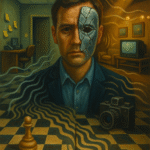

Watching Tom Ripley is like watching someone practice breathing — until he takes your breath away. In Anthony Minghella’s The Talented Mr. Ripley (1999), the phrase “Tom Ripley and the seduction of envy” is both lens and argument: envy not only motivates Ripley, it seduces him into performance, theft, and violence. This film analysis reads how performance of identity, cinematic technique, and class anxiety make Ripley legible — and unnervingly sympathetic.
Introduction
This piece argues that Tom Ripley is both seduced by envy and a seducer through it. Envy supplies the emotional fuel; performance — clothes, voice, manners, mimicked gestures — translates desire into social mobility. Minghella stages identity as theatrical labor: camera, score, editing, and production design collude with Ripley’s mimicry, coaxing the audience into complicity. Along the way, we’ll use film analysis and social-psychology framing (see Smith & Kim’s work on envy) to clarify why Ripley fascinates.
To expand the frame: Patricia Highsmith’s novel (1955) originally made Ripley an interior, quietly amoral figure whose impulses read as temperament more than pathology. Minghella adapts that interiority into a visible practice — a performance of identity that can be staged and measured. In doing so the film invites the viewer to reflect on broader cultural forms of mimicry and desire: postwar mobility, American posturing in Europe, and the late-1990s moment of branded personas. The focus keyword, “Tom Ripley and the seduction of envy,” captures both the psychological and cinematic structures that make the film a study in longing and masquerade.
Brief synopsis (spoiler warning)
Spoiler warning: major plot developments (including murder and assumed identity) are discussed. The Talented Mr. Ripley (1999) follows Tom Ripley (Matt Damon), a young American in 1950s Italy hired to fetch the wealthy Dickie Greenleaf (Jude Law) home. Ripley becomes entranced by Dickie’s life and gradually mounts an impersonation that, when threatened, escalates into murder. This summary sets the stage for a more focused look at envy, imitation, and cinematic seduction.
Character analysis & performance of identity
Tom Ripley’s psychology is structured by lack and imitation. A Tom Ripley character analysis shows someone whose survival strategy is social mimicry:
- Desire for belonging and status: Ripley fetishizes Dickie’s charm, friends, and continental cool.
- Lack as engine: his longing is built around what he doesn’t have; absence drives action.
- Fear of exposure: rejection becomes an existential threat, not merely embarrassment.
Identity is practice for Ripley. The performance of identity appears in clothing (borrowing Dickie’s jackets), voice (Matt Damon altering pitch and cadence), and body language (posture, cigarette handling). These small choices accumulate into a convincing — but fragile — impersonation. For writers and actors: show the labor of mimicry (pauses, recalibration) to make identity performance feel real.
Matt Damon — vocal and physical mimicry
Damon’s subtle vocal shifts and micro-expressions convert mimicry into someone we can watch closely. The film asks: do we root for him because we identify with longing, or because Minghella’s camera flatters him?
To illustrate with a short case study: the boat party scene is instructive. Ripley is initially peripheral, eyes darting, hands adjusting a borrowed shirt. The camera lingers on his attempt to laugh at the right moment, to draw breath at the same time as Dickie’s circle. These calibrated small acts — a practiced smile, the tilt of a cigarette — are the on-screen grammar of envy. They show that identity is not simply a costume but a repeated set of actions meant to be read and accepted by others.
Cinematic craft and complicity
Minghella’s film makes the camera partial to Ripley, which is how cinematic seduction works.
- Camera & framing: close-ups invite moral alignment; point-of-view shots make us share Ripley’s gaze.
- Editing & tempo: jump cuts after violent moments create disorientation; cross-cutting between public performance and private panic tightens suspense.
- Score & sound: Gabriel Yared’s restrained score turns longing into aural pleasure; sound bridges smooth over ethical ruptures.
- Production design: Italy is a prize — objects (ashtrays, sunglasses, tailored shirts) function as metrics of desire.
These formal choices make envy feel sensuous: the film teaches us how cinematic tools can align empathy with a morally ambiguous protagonist.
Film scholarship helps clarify this complicity. For example, scholars of the cinematic gaze (building on Laura Mulvey’s foundational work) show how camera alignment constructs sympathy. In Minghella’s hands, framing and sound repeatedly conspire to make Ripley appear as an elegiac, wronged figure rather than a calculating killer. Psychological work on envy (see Smith & Kim, 2007) describes envy as both cognitive comparison and affective pain — the film literalizes that pain through image and sound, converting it into something pleasurable to watch.
Supporting characters, adaptation notes, and cultural context
- Dickie Greenleaf (Jude Law): the charismatic object of Ripley’s desire; mirror and unattainable ideal.
- Marge Sherwood (Gwyneth Paltrow): moral center and the one who senses Ripley’s artifice.
- Freddie Miles (Philip Seymour Hoffman): abrasive foil who threatens exposure.
Adaptation note: Patricia Highsmith’s novel privileges interiority; Minghella externalizes via performance and mise-en-scène, inviting more empathy for Ripley. This change matters for The Talented Mr. Ripley (1999) themes — especially identity, class, and desire.
Cultural reading: released in the late-90s, the film anticipates curated selves and identity labor (think social media curation today). Ripley’s tactics prefigure online impersonation and curated envy.
Comparative case study: René Clément’s Purple Noon (1960) adapts the same source but makes Ripley colder, more overtly sociopathic. Comparing the two adaptations reveals directorial choices: Clément foregrounds menace; Minghella explores performance and seduction. The 1999 film’s lingering close-ups and empathetic score make envy legible as an aesthetic experience, whereas Purple Noon uses stark daylight and sharper angles to expose transactional cruelty.
Pivotal scenes for close reading
- Procida party / boat sequence — envy seeded by laughter, clothing, and camera proximity.
- Beach murder and aftermath — jump cuts and long takes create moral dislocation.
- Card-party telephone scene — small props (cufflinks, cigarettes) become tests of performance.
- Pompeii / near-final sequences — micro-expressions and tightening editing reveal cracks in the impersonation.
Each scene shows how envy is embodied and cinematicized.
Expanded close-reading tip: when watching, pause on non-dialogue moments. Notice how long the camera holds on Ripley after someone else speaks. These silences often register envy’s interior work — plotting, rehearsing, waiting — more convincingly than any explicit confession.
Practical applications: what creators and viewers can learn
For writers, directors, and actors seeking to channel the dynamic of “Tom Ripley and the seduction of envy,” consider these actionable tips:
- Use lack as motivation: define what the character is not and let that absence move plot and choices.
- Make mimicry labor visible: add small, repeatable actions (a practiced laugh, a repeated tug of a collar) to signal performance.
- Align formal elements with psychology: let camera, sound, and set dressing reflect emotional states rather than merely illustrating plot.
- Stage props as currency: objects often become shorthand for class and belonging; track who handles what and how.
Step-by-step guide to analyzing envy in film:
- Identify the object of envy (who/what is desired).
- List the behaviors the envious character adopts to bridge the gap.
- Note cinematic techniques that reward or punish these behaviors (framing, music, editing).
- Trace turning points when performance becomes criminal or dangerous.
- Situate the character in historical and cultural context (class systems, postwar mobility, late-90s identity culture).
- Ask how the film invites or resists viewer complicity.
Comparative analysis: situate Ripley alongside modern antiheroes. Shows like You (2018–) or films such as American Psycho (2000) also construct characters whose performative selves hide violent impulses. Ripley differs in that his violence is reactive to exposure of performance rather than nihilistic revelry; envy is the specific engine rather than psychopathy for its own sake.
Future trends and why Ripley still matters
Looking ahead, the themes in Tom Ripley and the seduction of envy are increasingly relevant. Deepfake technology, influencer curation, and performative authenticity make identity theft and mimicry both easier and more socially normalized. As online personas become commodity, cinematic texts that teach us how envy seduces will be crucial cultural documents.
Predictions:
- More adaptations exploring digital mimicry and the ethical stakes of identity performance.
- Film and media studies will increasingly read Ripley as proto-influencer: a person who manufactures a desirable life through image alone.
- Screenwriters will borrow the film’s tactic of letting formal style (editing, music, mise-en-scène) do psychological exposition.
Takeaways, where to watch, and discussion prompts
- Practical takeaways for creators: use lack to motivate characters; stage identity as labor; let form reflect psychology.
- Where to watch: if you’re searching for The Talented Mr. Ripley streaming, check major platforms or rental services (availability fluctuates).
Reader prompts: Which Ripley moment unsettled you most? Have you ever felt tempted to perform someone else?
Conclusion: Why Tom Ripley endures
Tom Ripley and the seduction of envy explains the film’s power: Minghella aligns cinematic craft with psychological longing, turning moral scrutiny into fascination. Ripley endures because he reflects a messy, uncomfortable human truth — the fear of being a nobody and the dangerous lengths some will go to become somebody. The film remains a compelling case study for anyone interested in how emotions like envy can be aestheticized and weaponized.
References & further reading
- Smith & Kim (2007), on envy and its forms (see external links).
- Patricia Highsmith — The Talented Mr. Ripley (novel) and adaptation histories (see external links).
Selected further reading: film reviews and scholarly responses to Minghella’s adaptation provide useful contrasts — compare contemporary reviews from critics such as Roger Ebert and scholarship on cinematic gaze and antihero ethics.
FAQ
Q: What do you mean by “Tom Ripley and the seduction of envy”?
A: The phrase treats envy as active: in the film, envy draws Ripley toward lives and objects he wants to possess. Minghella makes that process visually beautiful, which partially explains our complicity.
Q: Is Ripley a sociopath?
A: The film resists strict diagnosis. Ripley shows traits associated with antisocial tendencies, but Minghella also frames him as a product of social lack. The ambiguity is intentional.
Q: How does the film differ from the book?
A: Highsmith’s novel is colder and more interior; Minghella externalizes Ripley’s psychology and increases the visual seduction of envy.
Q: Which other films are useful for comparative study?
A: René Clément’s Purple Noon (1960) is an earlier adaptation that reads Ripley as more overtly menacing. American Psycho (2000) and modern series such as You (2018–) invite useful comparisons around performance, desire, and the consequences of mimicry.
Q: How can filmmakers apply lessons from Ripley’s portrayal?
A: Make internal motives visible through repeatable actions; use camera and sound to invite complex sympathy; and treat props as emotional signifiers.