Skip to content
screenpsyche.com
  • Home
  • Categories
    • Film Character Analysis
    • TV Character Analysis
    • Psychological Concepts via Characters
  • About Us
Subscribe

Film Character Analysis

  • Home
  • Film Character Analysis
  • Page 3
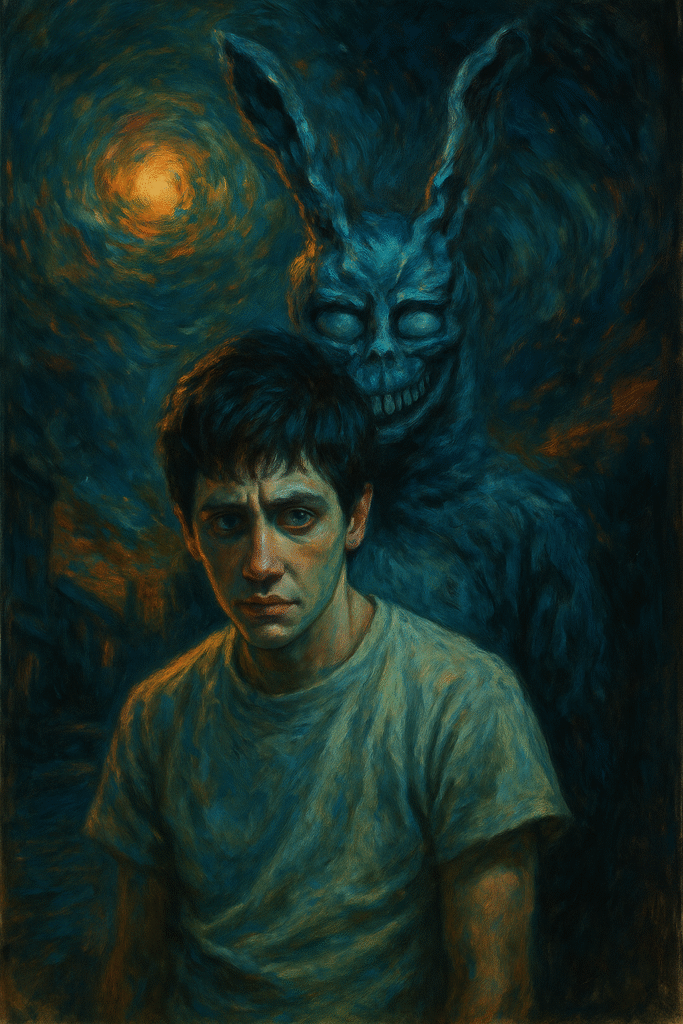
A surreal oil painting depicting a teenage boy standing under a swirling night sky with a glowing time vortex and a shadowy rabbit figure in the mist. Inspired by the film Donnie Darko, it symbolizes time loops, guilt, and adolescence through dreamlike lighting and deep blue-purple tones.
Posted inFilm Character Analysis

Exploring Time Loops: Guilt and Adolescence in ‘Donnie Darko’

'Donnie Darko', directed by Richard Kelly and released in 2001, has emerged as a cult classic in the realm of psychological thrillers and science fiction. Blending complex themes with a…
Posted by Screen Psyche October 26, 2025
A cinematic oil painting inspired by Léon: The Professional, showing a stoic hitman cleaning his gun beside a young girl gazing out a window, bathed in soft light — symbolizing the balance between innocence and violence.
Posted inFilm Character Analysis

Innocence and Violence in Léon: A Deep-Dive Analysis of The Professional

Luc Besson's 1994 masterpiece, Léon: The Professional, is far more than a stylish action film; it is a profound and unsettling exploration of the fragile line between good and evil. At…
Posted by Screen Psyche October 23, 2025
An oil painting depicting HAL 9000’s glowing red eye inside a futuristic spacecraft, symbolizing artificial intelligence consciousness and emotional complexity from 2001: A Space Odyssey, painted in metallic blues and warm red tones.
Posted inFilm Character Analysis

Inside the Mind of HAL 9000: When Machines Learn to Feel

Stanley Kubrick's 1968 film, 2001: A Space Odyssey, is often heralded as one of the most significant works in science fiction cinema. The film explores humanity's relationship with technology and the…
Posted by Screen Psyche October 20, 2025
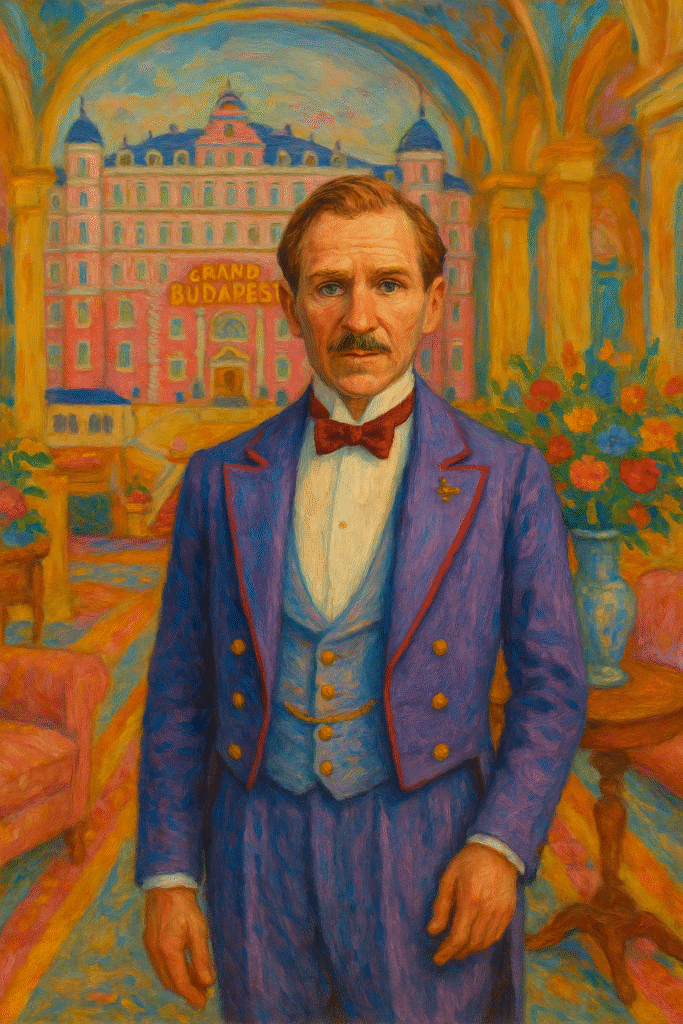
An oil painting inspired by The Grand Budapest Hotel showing Gustave H. in his purple concierge uniform standing in front of the pastel-pink hotel surrounded by colorful mountains, symbolizing elegance, nostalgia, and decay in Wes Anderson’s cinematic world.
Posted inFilm Character Analysis

The Grand Budapest Hotel’s Gustave H.: Perfectionism, Decay, and the Art of Elegance

Wes Anderson’s 2014 film, _The Grand Budapest Hotel_, offers a stunning tapestry woven with a rich array of themes, aesthetics, and character intricacies. Set in the fictional Republic of Zubrowka,…
Posted by Screen Psyche October 17, 2025
A realistic oil painting of a man and a woman walking together along the Seine River at sunset in Paris, with golden light reflecting on the water, symbolizing nostalgia, emotional connection, and unspoken romantic tension inspired by Before Sunset.
Posted inFilm Character Analysis

Céline in ‘Before Sunset’: Navigating Nostalgia and the Fear of Settling in Relationships

Introduction to Céline and 'Before Sunset' Richard Linklater's 'Before Sunset' (2004) stands as a pivotal exploration of relationships through the lens of time, memory, and shifting emotional landscapes. Serving as…
Posted by Screen Psyche October 14, 2025
A romantic oil painting of Jack Dawson and Rose standing on the deck of the Titanic at sunset, symbolizing love, sacrifice, and heroism with warm light and ocean waves in the background.
Posted inFilm Character Analysis

Jack in Titanic: A Deep Dive into the Psychology of Romantic Heroes

Introduction to Jack's Character and Context within Titanic In James Cameron's 1997 film Titanic, the character of Jack Dawson, portrayed by Leonardo DiCaprio, emerges as one of the quintessential romantic heroes…
Posted by Screen Psyche October 10, 2025
An oil painting of a young female FBI trainee standing in a dimly lit hallway, symbolizing courage and vulnerability. Inspired by Clarice Starling from Silence of the Lambs, the artwork captures themes of fear, determination, and gender dynamics in a male-dominated world.
Posted inFilm Character Analysis

Gender Roles in Silence of the Lambs

In the realm of cinematic history, few characters have captivated audiences with such layered complexity as Clarice Starling from the 1991 film ‘Silence of the Lambs’, directed by Jonathan Demme.…
Posted by Screen Psyche October 7, 2025
A realistic oil painting of Travis Bickle from Taxi Driver, sitting alone in his taxi, symbolizing loneliness and urban isolation.
Posted inFilm Character Analysis

Exploring Loneliness in ‘Taxi Driver’

Introduction to Travis Bickle and 'Taxi Driver' 'Taxi Driver,' directed by Martin Scorsese and released in 1976, is a landmark film that provides a haunting portrayal of urban isolation and…
Posted by Screen Psyche October 4, 2025
Oil painting of Forrest Gump sitting on a park bench with a suitcase, symbolizing innocence and destiny, in an impressionistic cinematic style.
Posted inFilm Character Analysis

Forrest Gump: Exploring Innocence in Forrest Gump

Introduction to the Film and Its Cultural Significance Forrest Gump, directed by Robert Zemeckis and released in 1994, is a cinematic triumph that transcends mere storytelling to reach into the…
Posted by Screen Psyche October 1, 2025
Oil painting-style portrait of Amy March from Little Women, portraying her ambition and artistic elegance, inspired by her journey in the 1994 and 2019 film adaptations.
Posted inFilm Character Analysis

Exploring Amy March in Little Women: Ambition and Jealousy

Amy March, portrayed by Kirsten Dunst as a child and Samantha Mathis as an adult in the 1994 adaptation of Louisa May Alcott’s classic novel "Little Women," is a character…
Posted by Screen Psyche September 28, 2025

Posts pagination

Previous page 1 2 3 4 5 … 8 Next page

Recent Posts

  • Love, Safety, and the Illusion of Rescue: Alex in Maid
  • Don’t Worry Darling; Love, Control, and the Fear of Being Ordinary
  • When Saying Yes Erases You: Boundary Porosity In Relationships
  • J.D. in Scrubs: The Comfort of Fantasy in an Uncertain Identity
  • Hans Landa in Inglourious Basterds: Analysis Of Charming Evil

Recent Comments

  1. Love, Safety, and the Illusion of Rescue: Alex in Maid on The Trauma Bond: Why Characters Stay in Toxic Relationships
  2. Don’t Worry Darling; Love, Control, and the Fear of Being Ordinary on The Trauma Bond: Why Characters Stay in Toxic Relationships
  3. Ruth Langmore Loyalty And Rage In Ozark on The Trauma Bond: Why Characters Stay in Toxic Relationships
  4. Wearing The Mask: Study Of The False Self - screenpsyche.com on Identity and Reality in ‘The Truman Show’
  5. Killing Eve Themes: From Civilian To Dangerous - screenpsyche.com on The Trauma Bond: Why Characters Stay in Toxic Relationships

Archives

  • May 2026
  • April 2026
  • March 2026
  • February 2026
  • January 2026
  • December 2025
  • November 2025
  • October 2025
  • September 2025
  • August 2025
  • July 2025

Categories

  • Film Character Analysis
  • Psychological Concepts via Characters
  • TV Character Analysis
Search
Categories
  • Film Character Analysis
  • Psychological Concepts via Characters
  • TV Character Analysis
Archives
  • May 2026
  • April 2026
  • March 2026
  • February 2026
  • January 2026
  • December 2025
  • November 2025
  • October 2025
  • September 2025
  • August 2025
  • July 2025
Copyright 2026 — screenpsyche.com. All rights reserved. Bloghash WordPress Theme
Scroll to Top