Skip to content
screenpsyche.com
  • Home
  • Categories
    • Film Character Analysis
    • TV Character Analysis
    • Psychological Concepts via Characters
  • About Us
Subscribe

Posts by Screen Psyche

  • Home
  • Screen Psyche
  • Page 8
About Screen Psyche
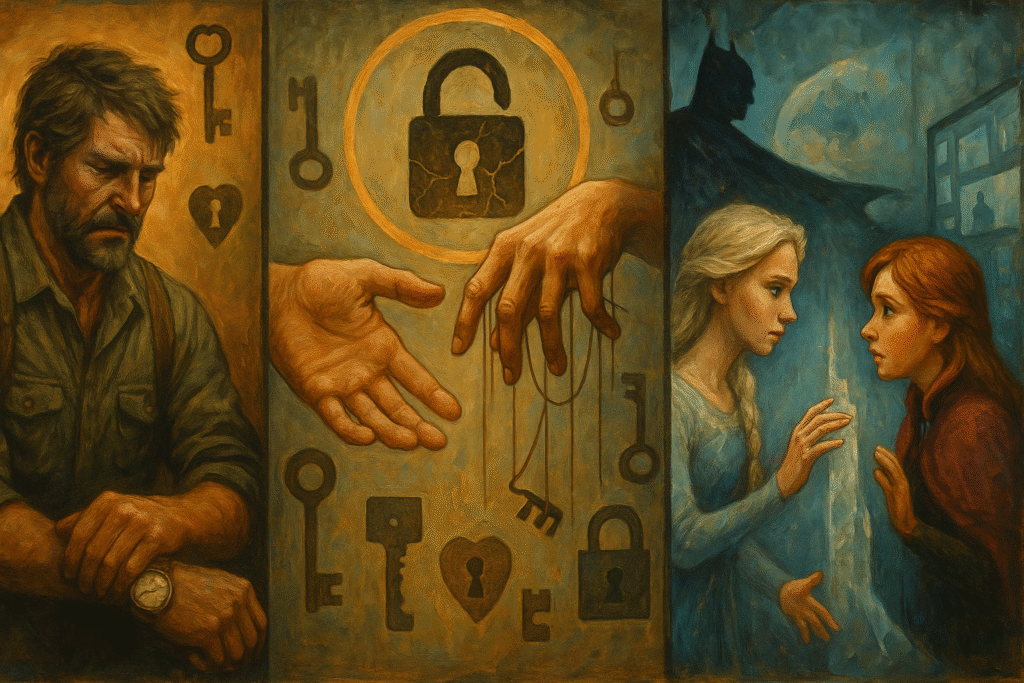
Triptych of Joel, puppet-string hands with keys, and Elsa facing Anna—symbolizing savior complex and the line between help and control.
Posted inPsychological Concepts via Characters

The Psychology of Helping: Savior Complex and When Helping Becomes Control

In the complex dance of human relationships, the line between genuine support and unintentional control can be perilously thin. We've all felt the urge to help someone we care about,…
Posted by Screen Psyche October 28, 2025
Tanya McQuoid on a resort balcony at sunset, staring at an unread message; comedy/tragedy masks and lotus motifs signal lonely disconnection.
Posted inTV Character Analysis

Tanya McQuoid and the Tragicomedy of Loneliness in The White Lotus

Unpacking an Iconic White Lotus Character Tanya McQuoid, the unforgettable character brought to life by Jennifer Coolidge in HBO's The White Lotus, is more than just a source of comedy; she…
Posted by Screen Psyche October 27, 2025
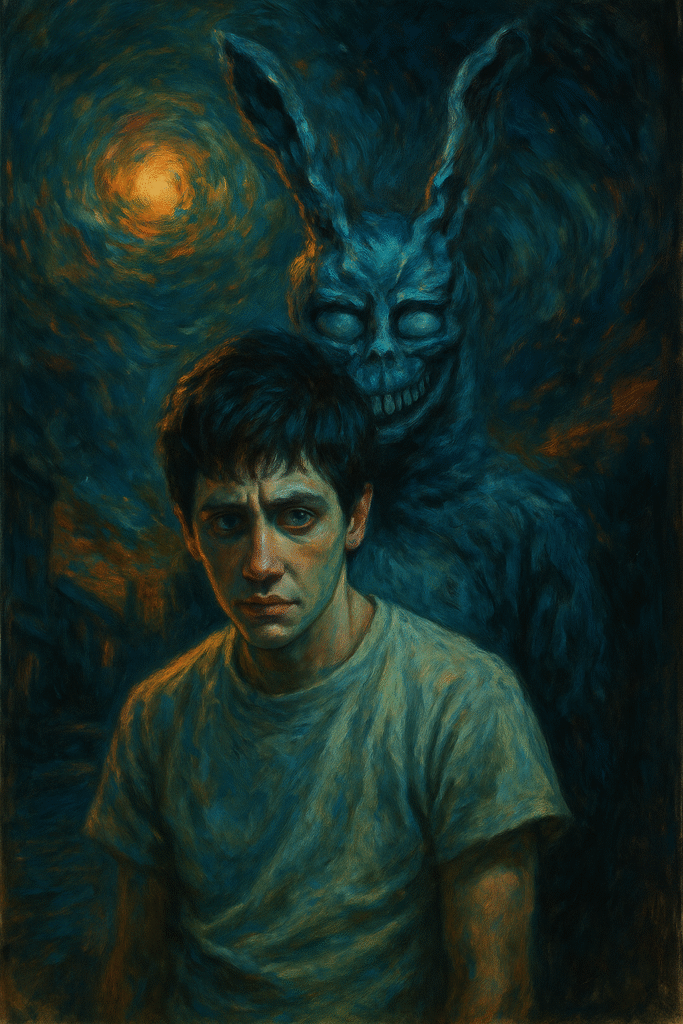
A surreal oil painting depicting a teenage boy standing under a swirling night sky with a glowing time vortex and a shadowy rabbit figure in the mist. Inspired by the film Donnie Darko, it symbolizes time loops, guilt, and adolescence through dreamlike lighting and deep blue-purple tones.
Posted inFilm Character Analysis

Exploring Time Loops: Guilt and Adolescence in ‘Donnie Darko’

'Donnie Darko', directed by Richard Kelly and released in 2001, has emerged as a cult classic in the realm of psychological thrillers and science fiction. Blending complex themes with a…
Posted by Screen Psyche October 26, 2025
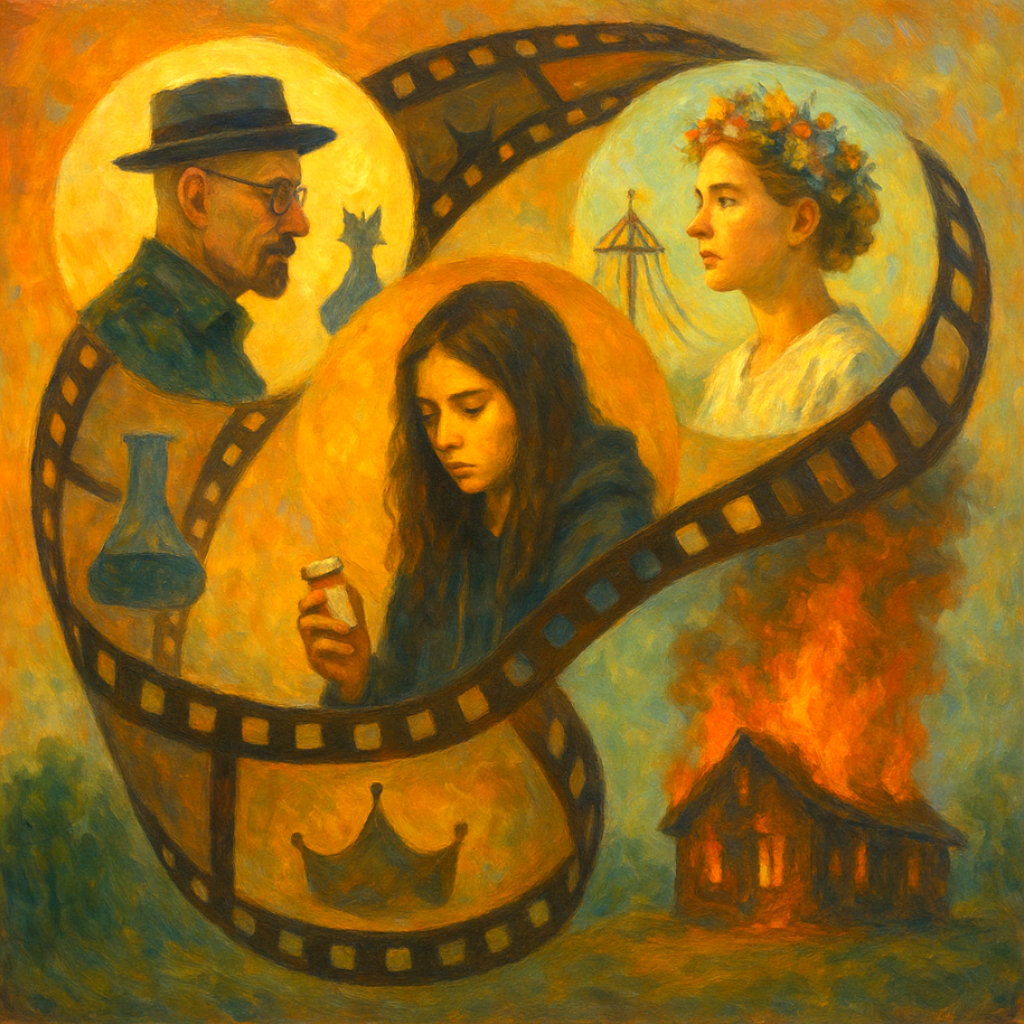
Film-strip collage of Walter White, Rue with pill bottle, and Dani in flower crown, symbolizing repetition compulsion and trauma in storytelling.
Posted inPsychological Concepts via Characters

Why Do Characters Relive Trauma? Exploring Repetition Compulsion

Ever wonder why characters in shows like 'Breaking Bad' or 'Euphoria' seem stuck in a loop, reliving the same pain over and over? This phenomenon, known as repetition compulsion, is a…
Posted by Screen Psyche October 25, 2025
A cinematic oil painting inspired by Yellowjackets, showing Lottie Matthews standing in a misty forest surrounded by candle-holding followers — symbolizing the rise of her cult, faith, and trauma.
Posted inTV Character Analysis

Lottie Matthews’ Cult: An Analysis of Trauma and Faith in Yellowjackets

Explore Lottie Matthews' journey of trauma and faith in Yellowjackets, examining her evolution into a cult leader amid psychological turmoil. Lottie Matthews' character evolution in the Yellowjackets TV show demonstrates how severe…
Posted by Screen Psyche October 24, 2025
A cinematic oil painting inspired by Léon: The Professional, showing a stoic hitman cleaning his gun beside a young girl gazing out a window, bathed in soft light — symbolizing the balance between innocence and violence.
Posted inFilm Character Analysis

Innocence and Violence in Léon: A Deep-Dive Analysis of The Professional

Luc Besson's 1994 masterpiece, Léon: The Professional, is far more than a stylish action film; it is a profound and unsettling exploration of the fragile line between good and evil. At…
Posted by Screen Psyche October 23, 2025
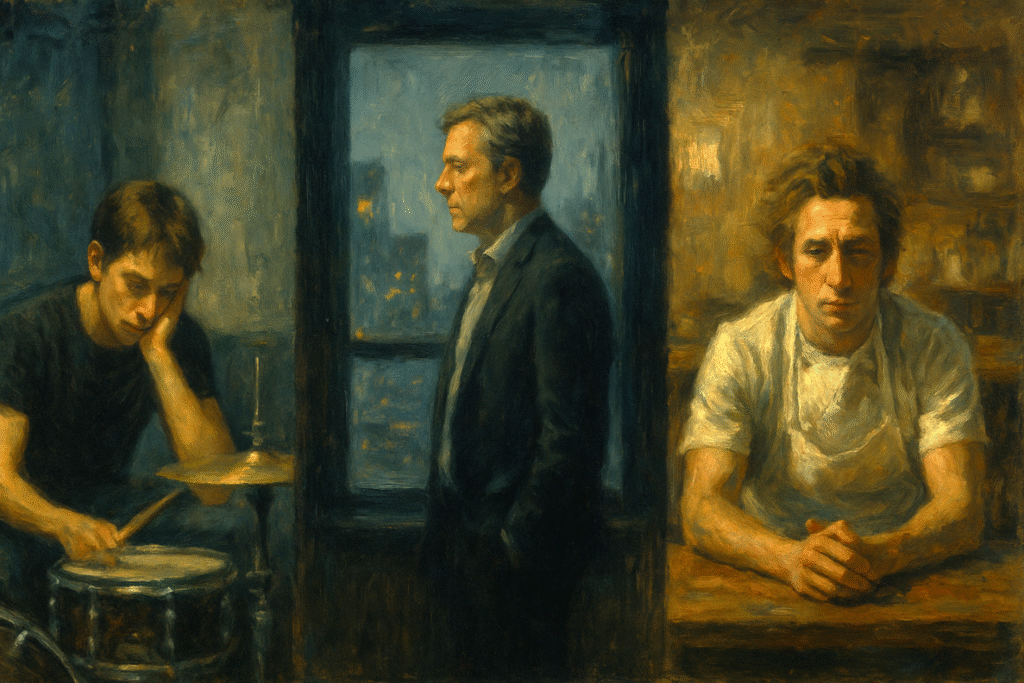
A cinematic oil painting depicting three symbolic figures — a jazz drummer under harsh light, a businessman frozen before a city skyline, and a chef in a tense kitchen — representing the fear of stagnation and emotional pressure in modern storytelling.
Posted inPsychological Concepts via Characters

The Fear of Stagnation: Analyzing Its Cultural and Psychological Significance in Modern Storytelling

Stagnation and Its Thematic Relevance Stagnation, often characterized by a lack of progress, development, or change, holds a significant place in modern storytelling. As the pace of contemporary life accelerates,…
Posted by Screen Psyche October 22, 2025
An oil painting inspired by The Blacklist, depicting a calm and authoritative man symbolizing Harold Cooper standing in a shadowy FBI office surrounded by monitors and files, radiating stoicism and leadership.
Posted inTV Character Analysis

Harold Cooper Blacklist: The Stoic Leader

Introduction to Harold Cooper and The Blacklist The Blacklist, a gripping crime thriller series on NBC that premiered in 2013, has captured the attention and hearts of audiences worldwide. The…
Posted by Screen Psyche October 21, 2025
An oil painting depicting HAL 9000’s glowing red eye inside a futuristic spacecraft, symbolizing artificial intelligence consciousness and emotional complexity from 2001: A Space Odyssey, painted in metallic blues and warm red tones.
Posted inFilm Character Analysis

Inside the Mind of HAL 9000: When Machines Learn to Feel

Stanley Kubrick's 1968 film, 2001: A Space Odyssey, is often heralded as one of the most significant works in science fiction cinema. The film explores humanity's relationship with technology and the…
Posted by Screen Psyche October 20, 2025
An oil painting depicting three emotionally detached figures — a quiet driver in a dim city, a pale girl with braids staring blankly, and a stylish woman with a cold smile — rendered in muted colors and soft light to symbolize isolation and introspection.
Posted inPsychological Concepts via Characters

The Psychology of Detachment: Why Some Characters Feel Too Little, Not Too Much

Introduction to Emotional Detachment in Characters In the worlds of film and television, numerous characters embody emotional detachment, provoking various responses from audiences. Emotional detachment is characterized by a lack…
Posted by Screen Psyche October 19, 2025

Posts pagination

Previous page 1 … 6 7 8 9 10 … 24 Next page

Recent Posts

  • Mildred Hayes And Anger As Loyalty To The Dead
  • Choice Overload On Screen: When Too Many Options Hurt
  • When Curiosity Quietly Becomes Obsession in Mindhunter
  • Ava: The Psychology of Performing Vulnerability
  • When People Stop Believing Their Actions Matter

Recent Comments

  1. Love, Safety, and the Illusion of Rescue: Alex in Maid on The Trauma Bond: Why Characters Stay in Toxic Relationships
  2. Don’t Worry Darling; Love, Control, and the Fear of Being Ordinary on The Trauma Bond: Why Characters Stay in Toxic Relationships
  3. Ruth Langmore Loyalty And Rage In Ozark on The Trauma Bond: Why Characters Stay in Toxic Relationships
  4. Wearing The Mask: Study Of The False Self - screenpsyche.com on Identity and Reality in ‘The Truman Show’
  5. Killing Eve Themes: From Civilian To Dangerous - screenpsyche.com on The Trauma Bond: Why Characters Stay in Toxic Relationships

Archives

  • August 2026
  • July 2026
  • June 2026
  • May 2026
  • April 2026
  • March 2026
  • February 2026
  • January 2026
  • December 2025
  • November 2025
  • October 2025
  • September 2025
  • August 2025
  • July 2025

Categories

  • Film Character Analysis
  • Psychological Concepts via Characters
  • TV Character Analysis
Search
Categories
  • Film Character Analysis
  • Psychological Concepts via Characters
  • TV Character Analysis
Archives
  • August 2026
  • July 2026
  • June 2026
  • May 2026
  • April 2026
  • March 2026
  • February 2026
  • January 2026
  • December 2025
  • November 2025
  • October 2025
  • September 2025
  • August 2025
  • July 2025
Copyright 2026 — screenpsyche.com. All rights reserved. Bloghash WordPress Theme
Scroll to Top