Skip to content
screenpsyche.com
  • Home
  • Categories
    • Film Character Analysis
    • TV Character Analysis
    • Psychological Concepts via Characters
  • About Us
Subscribe

Psychological Concepts via Characters

  • Home
  • Psychological Concepts via Characters
  • Page 3
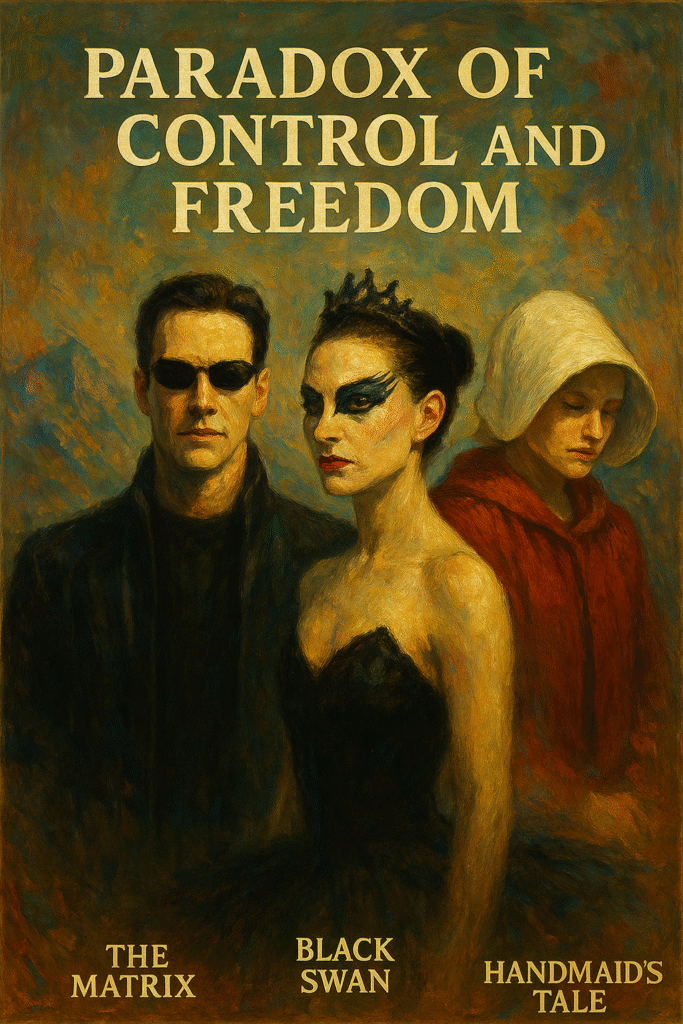
An oil painting symbolizing the paradox of control and freedom, featuring a ballerina between light and shadow, a woman in a red cloak walking toward an open door, and a figure choosing between mechanical and organic paths, inspired by The Matrix, Black Swan, and The Handmaid’s Tale.
Posted inPsychological Concepts via Characters

The Paradox of Control and Freedom

In the spectrum of human experience, the dichotomy of freedom and control presents a fascinating psychological landscape, especially when explored through media narratives. Characters offered the opportunity to break free…
Posted by Screen Psyche October 16, 2025
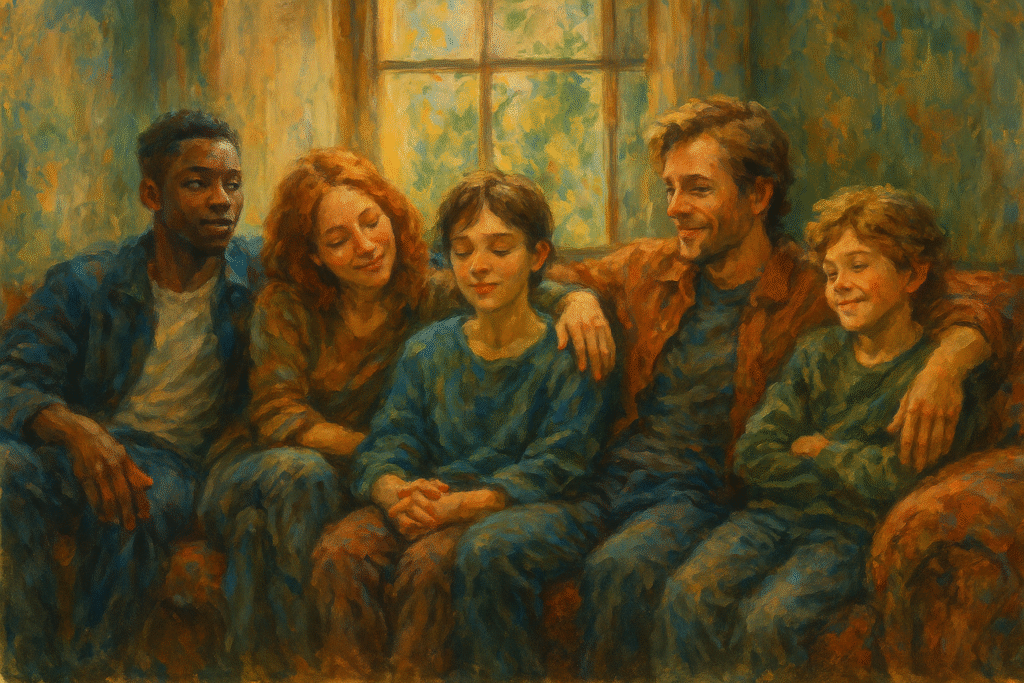
An impressionistic oil painting showing a diverse group of people from different backgrounds gathered in a warm living room, sharing laughter and closeness, representing the concept of found families and the psychology of belonging.
Posted inPsychological Concepts via Characters

The Psychology of Found Families in Media

Introduction to Found Families and Their Significance in Psychology At its core, the concept of a found family represents an alternative idea of kinship that transcends biological connections. Derived from the notion…
Posted by Screen Psyche October 13, 2025
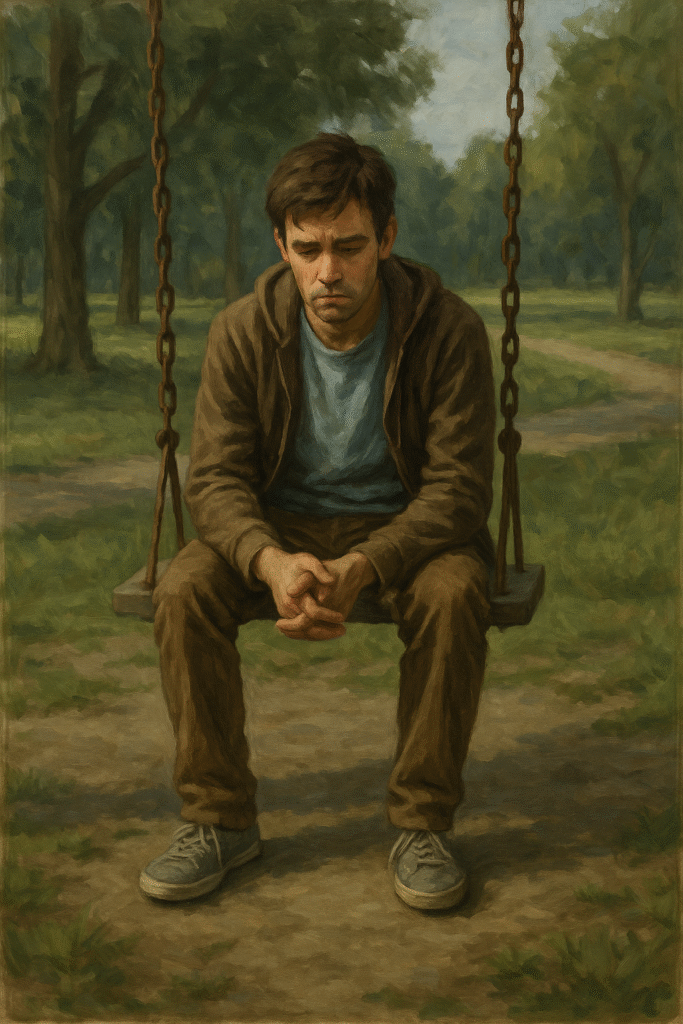
A realistic oil painting of an adult sitting in a daylight-filled apartment surrounded by childhood objects like toys and comics, symbolizing the emotional struggle of the Peter Pan Syndrome — the refusal to grow up.
Posted inPsychological Concepts via Characters

Understanding the Peter Pan Syndrome: Characters Who Refuse to Grow Up

Definition and Explanation of the Peter Pan Syndrome The term Peter Pan Syndrome refers to a psychological condition wherein an adult has not grown up and exhibits childlike behavior and attitudes. Coined…
Posted by Screen Psyche October 9, 2025
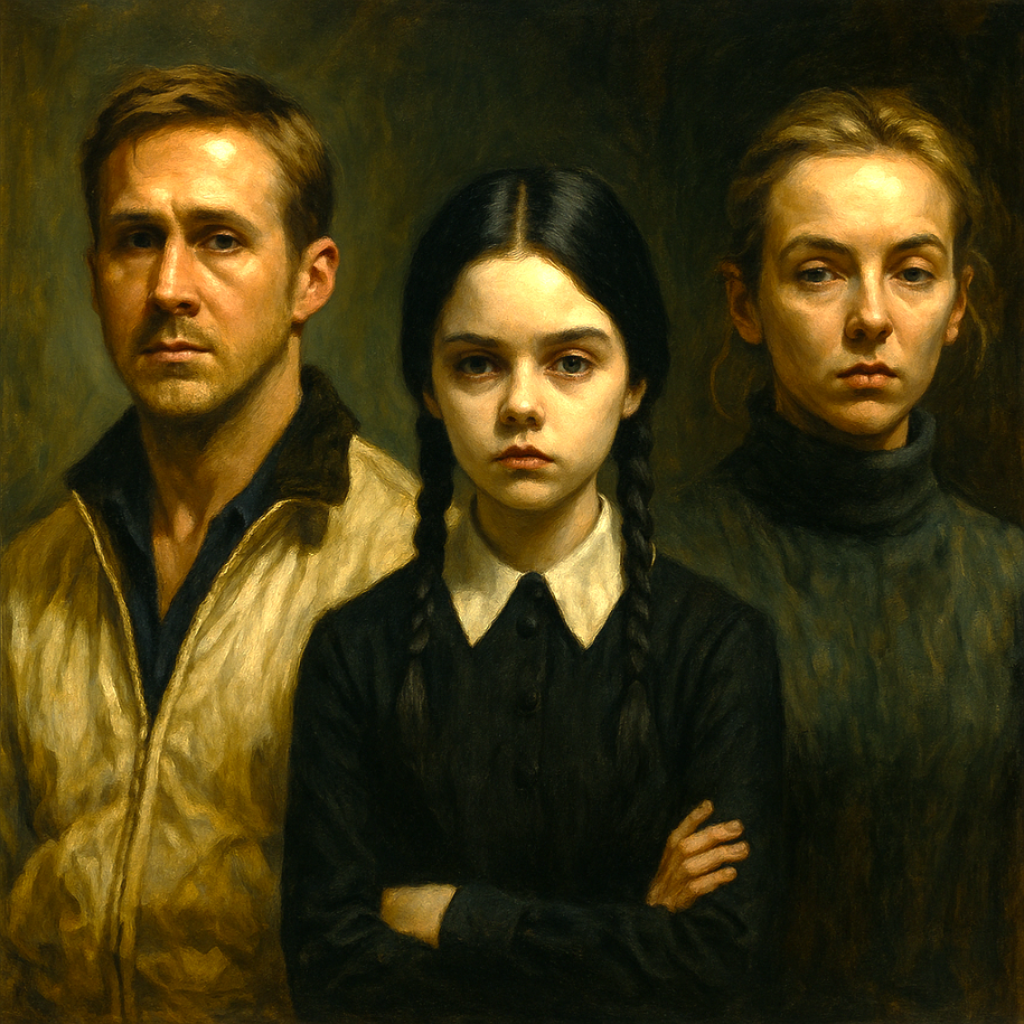
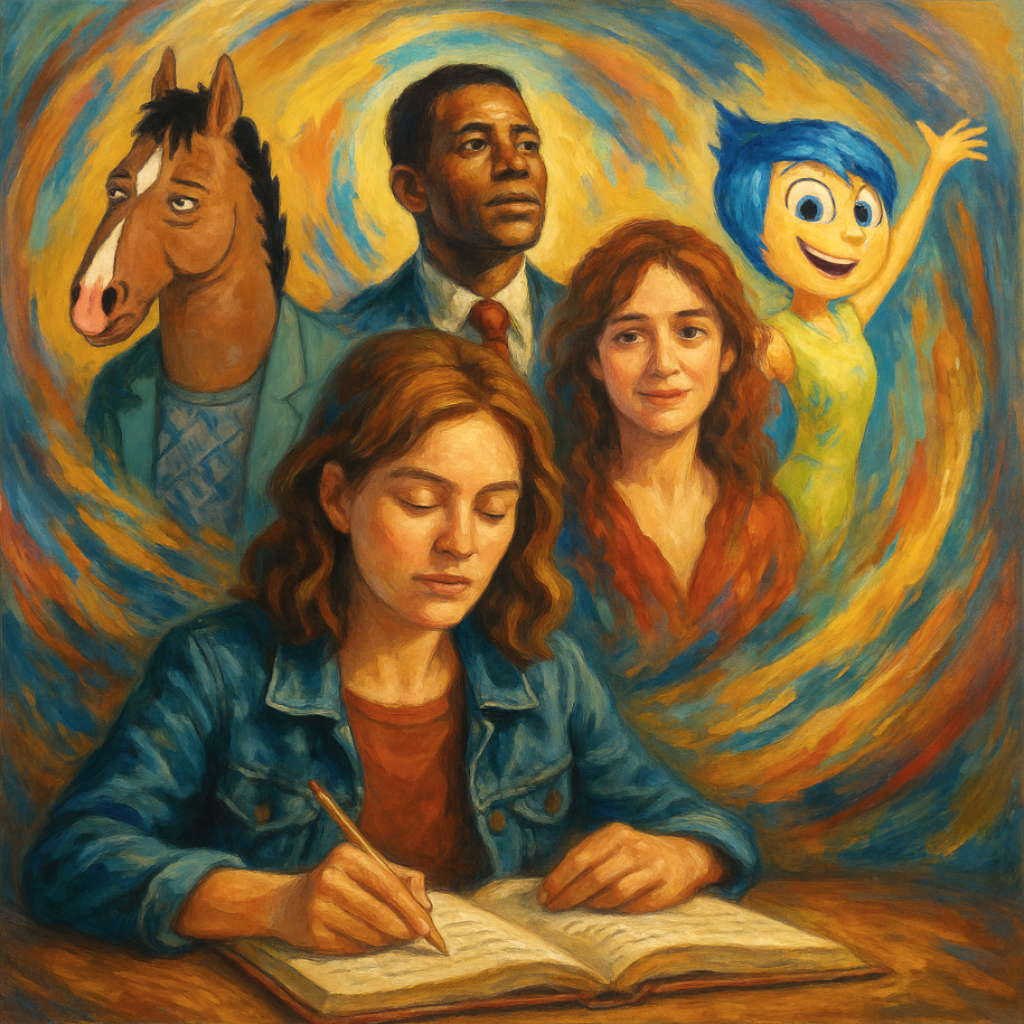
An oil painting depicting four outsider characters from film and television, each representing different forms of alienation and belonging, painted in a cinematic, semi-realistic style.
Posted inPsychological Concepts via Characters

The Outsider Archetype: Exploring Belonging, Alienation, and Creative Power in Media

Introduction to the Outsider Archetype The outsider archetype is a prominent motif in literature, film, and television, representing characters who exist on the fringes of society. These individuals often struggle…
Posted by Screen Psyche October 6, 2025
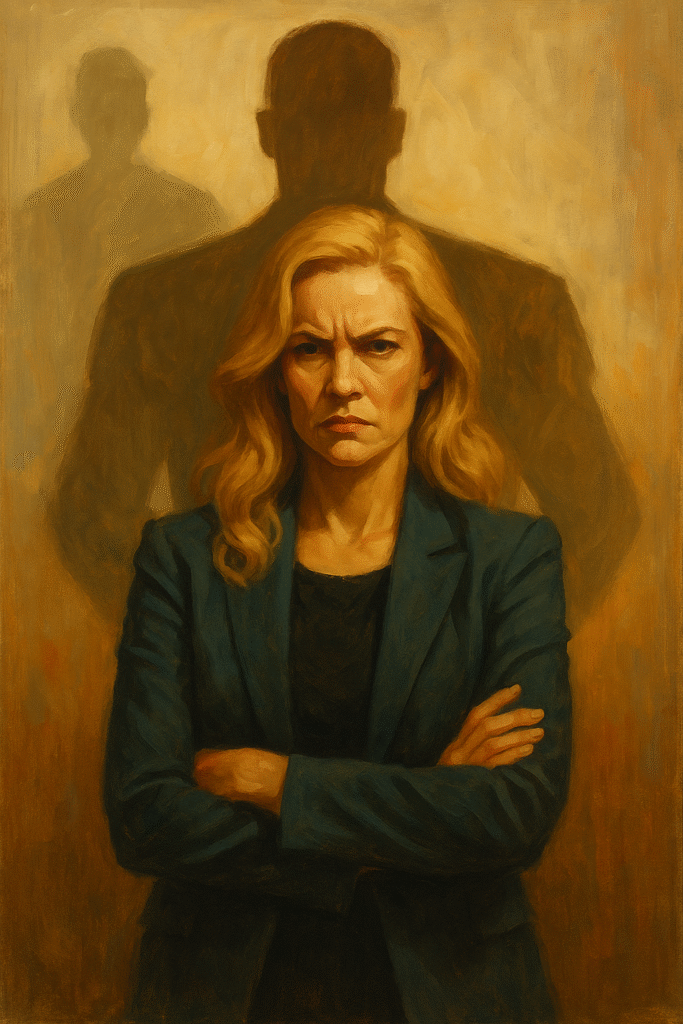
Semi-realistic oil painting of a powerful woman in abstract tones, symbolizing femininity, control, and the psychological cost of power in media narratives.
Posted inPsychological Concepts via Characters

The Overpowering Feminine: Control, Masculine Energy, and the Cost of Power

Introduction to the Topic and Its Relevance in Media In contemporary media, the representation of women has experienced a transformative shift. The portrayal of powerful female characters often leads to…
Posted by Screen Psyche October 3, 2025
Oil painting-style illustration symbolizing narrative therapy, showing individuals rewriting their life stories and transforming struggles into empowerment.
Posted inPsychological Concepts via Characters

Exploring Narrative Therapy in Media: Character Development and Empowerment

Introduction to Narrative Therapy and Its Principles Narrative therapy, developed by Michael White and David Epston in the 1980s, is a therapeutic approach that empowers individuals to reshape the stories…
Posted by Screen Psyche September 30, 2025
Oil painting of a lone figure walking on a path surrounded by bright, abstract landscapes, symbolizing the fear of mediocrity and the search for meaning in life.
Posted inPsychological Concepts via Characters

The Fear of Mediocrity: A Psychological Exploration in Character Development

Introduction to the Theme of Mediocrity in Storytelling Mediocrity, the state of being average, often bears a negative connotation in our society, where exceptional achievements are glorified, and the ordinary…
Posted by Screen Psyche September 27, 2025
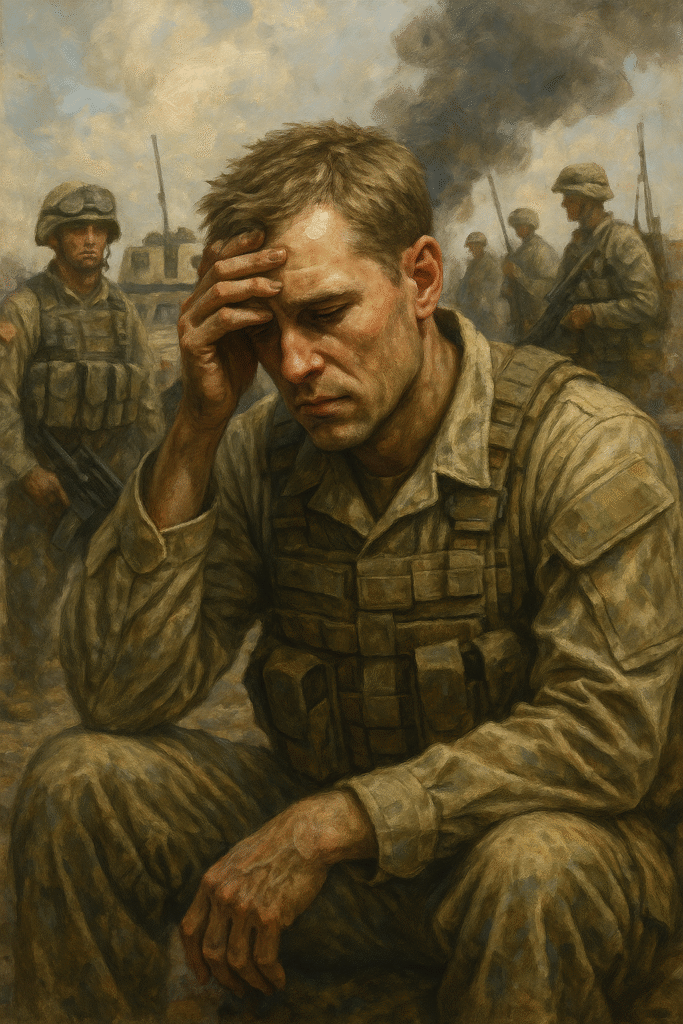
Oil painting of a soldier reflecting during wartime, symbolizing the psychological conflict of moral injury, duty versus humanity.
Posted inPsychological Concepts via Characters

Moral Injury in War Films: When Duty Conflicts with Humanity

Introduction to the Psychological Impact of Moral Injury in War Films Moral injury represents a profound psychological wound stemming from actions that violate one’s moral or ethical code, especially in…
Posted by Screen Psyche September 24, 2025
Oil painting of a young man in emotional conflict, symbolizing the fear of intimacy and the struggle to open up in relationships.
Posted inPsychological Concepts via Characters

The Fear of Intimacy: Why Some Characters Run from Love

The fear of intimacy, a pervasive theme in television and film, offers a compelling lens through which to explore the complexities of human connection. This deep-seated anxiety surrounding close relationships…
Posted by Screen Psyche September 21, 2025
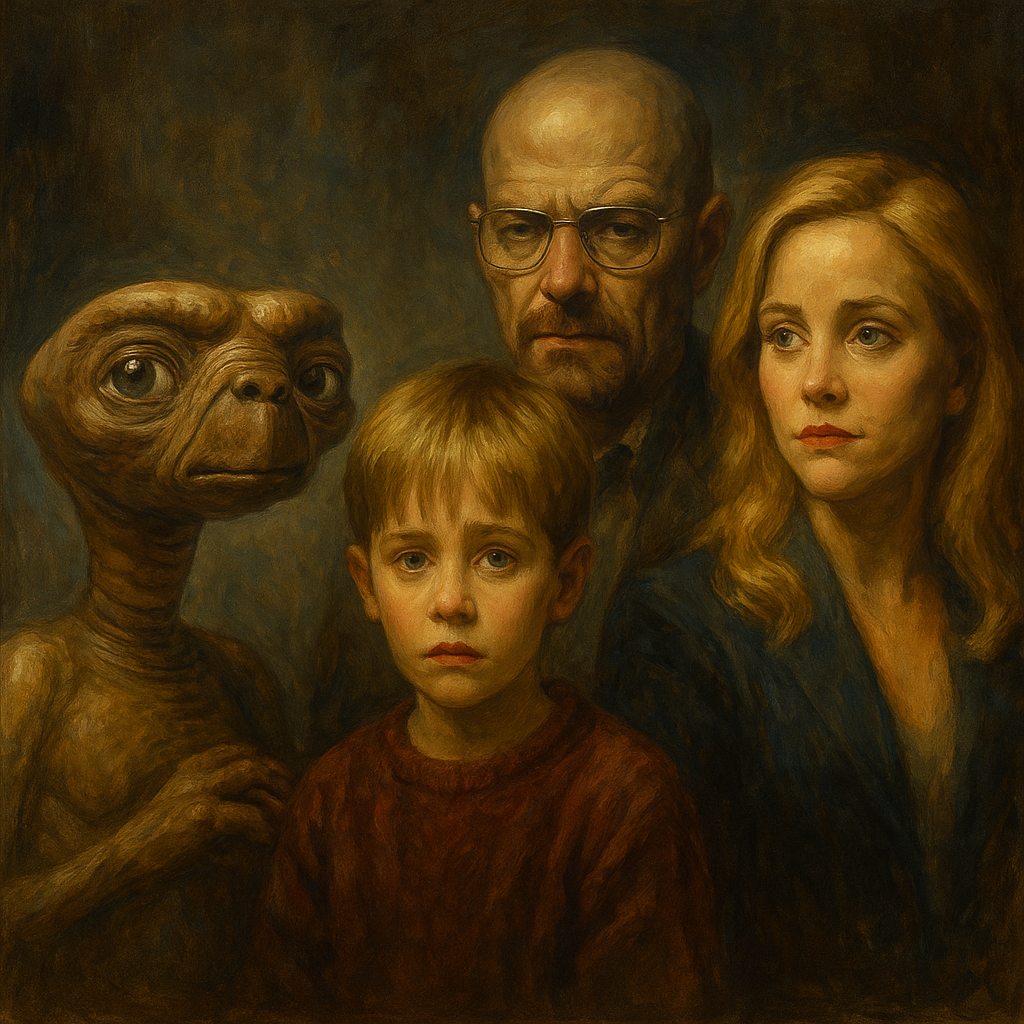
A realistic oil painting showing multiple film and TV characters burdened with emotional labor, their faces and body language expressing exhaustion, resilience, and hidden strength, symbolizing the invisible emotional work in storytelling.
Posted inPsychological Concepts via Characters

The Invisible Burden: Emotional Labor as a Narrative Force

Understanding Emotional Labor: A Historical and Societal Perspective Emotional labor, a concept introduced by sociologist Arlie Russell Hochschild in her 1983 book The Managed Heart, describes the effort involved in managing…
Posted by Screen Psyche September 17, 2025

Posts pagination

Previous page 1 2 3 4 5 … 8 Next page

Recent Posts

  • When Love Flips To Hate: Analysis Through The Lens Of Splitting
  • George Bailey’s Emotional Burden Of Being Everyone’s Safety Net
  • Self-Objectification: Becoming the Brand You Perform
  • Ego and Mastery in The Bear: How Luca Becomes Carmy’s Healthiest ‘Rival’
  • The Girl With The Dragon Tattoo: Lisbeth Salander And Trust As A System

Recent Comments

  1. Wearing The Mask: Study Of The False Self - screenpsyche.com on Identity and Reality in ‘The Truman Show’
  2. Killing Eve Themes: From Civilian To Dangerous - screenpsyche.com on The Trauma Bond: Why Characters Stay in Toxic Relationships
  3. Killing Eve Themes: From Civilian To Dangerous - screenpsyche.com on Charm and Chaos in Killing Eve: A Deep Dive into Villanelle
  4. Parasocial Attachment: Loving a Person Who Doesn’t Know You on The Double Life of Severus Snape: Love, Bitterness, and Redemption in Harry Potter
  5. Kendall on Peggy Olson in Mad Men: A Symbol of Feminism and Ambition

Archives

  • February 2026
  • January 2026
  • December 2025
  • November 2025
  • October 2025
  • September 2025
  • August 2025
  • July 2025

Categories

  • Film Character Analysis
  • Psychological Concepts via Characters
  • TV Character Analysis
Search
Categories
  • Film Character Analysis
  • Psychological Concepts via Characters
  • TV Character Analysis
Archives
  • February 2026
  • January 2026
  • December 2025
  • November 2025
  • October 2025
  • September 2025
  • August 2025
  • July 2025
Copyright 2026 — screenpsyche.com. All rights reserved. Bloghash WordPress Theme
Scroll to Top