Skip to content
screenpsyche.com
  • Home
  • Categories
    • Film Character Analysis
    • TV Character Analysis
    • Psychological Concepts via Characters
  • About Us
Subscribe

Psychological Concepts via Characters

  • Home
  • Psychological Concepts via Characters
  • Page 3
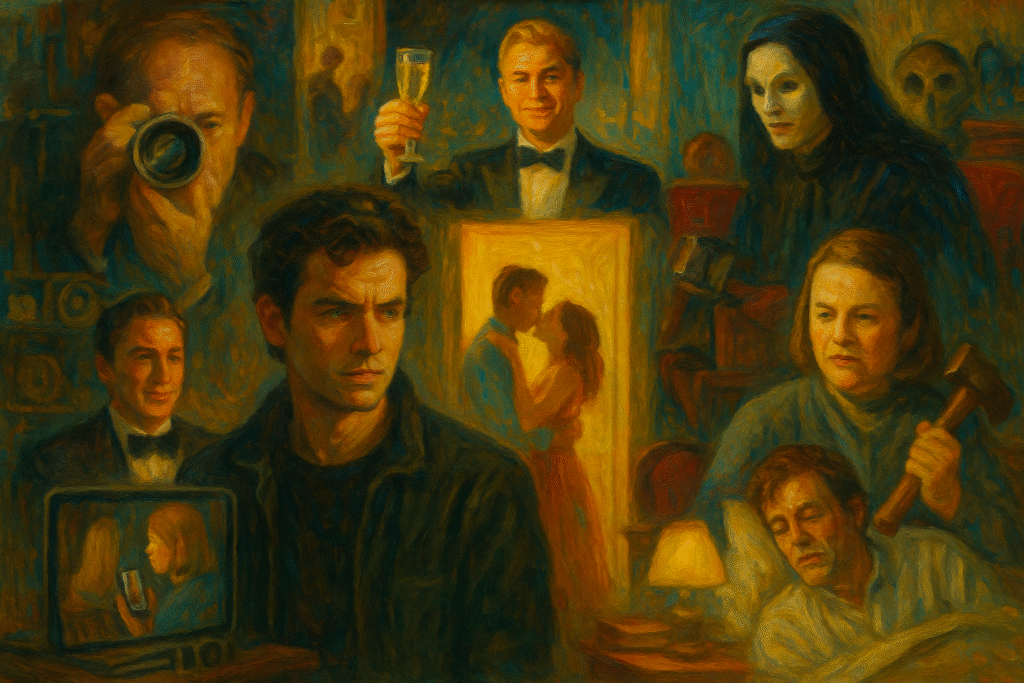
Triptych mirror with Joker’s shadow, Amy-like woman writing, and Don Draper–type ad man; shattered shards reflect our flaws and identities.
Posted inPsychological Concepts via Characters

The Mirror Effect: Why We Fall for Characters Who Reflect Our Flaws

Understanding the Powerful Connection to Flawed Characters In film and literature, the most memorable characters are rarely the perfect ones. Instead, they are often reflections of ourselves, embodying the messy,…
Posted by Screen Psyche October 31, 2025
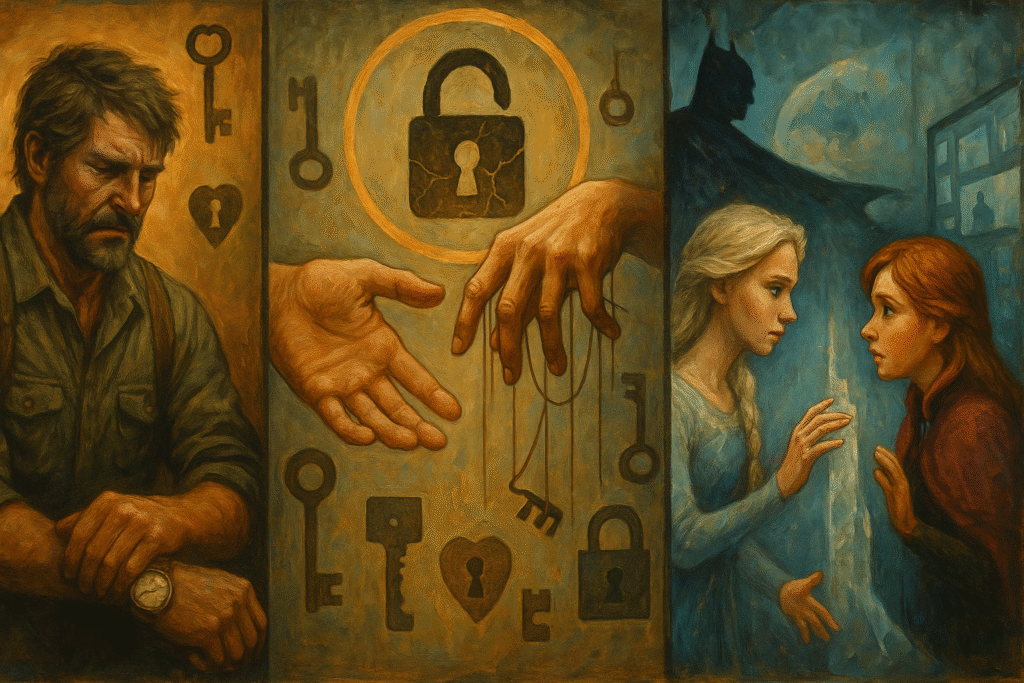
Triptych of Joel, puppet-string hands with keys, and Elsa facing Anna—symbolizing savior complex and the line between help and control.
Posted inPsychological Concepts via Characters

The Psychology of Helping: Savior Complex and When Helping Becomes Control

In the complex dance of human relationships, the line between genuine support and unintentional control can be perilously thin. We've all felt the urge to help someone we care about,…
Posted by Screen Psyche October 28, 2025
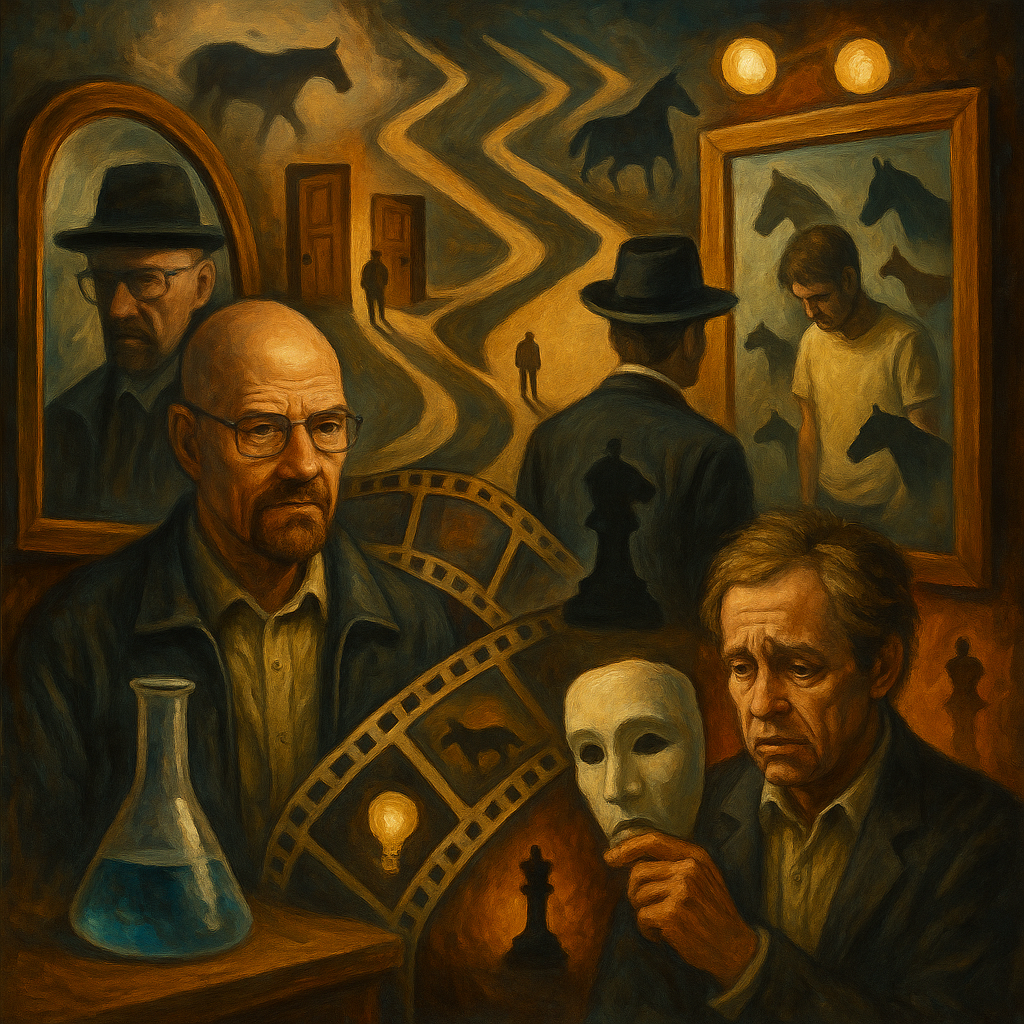
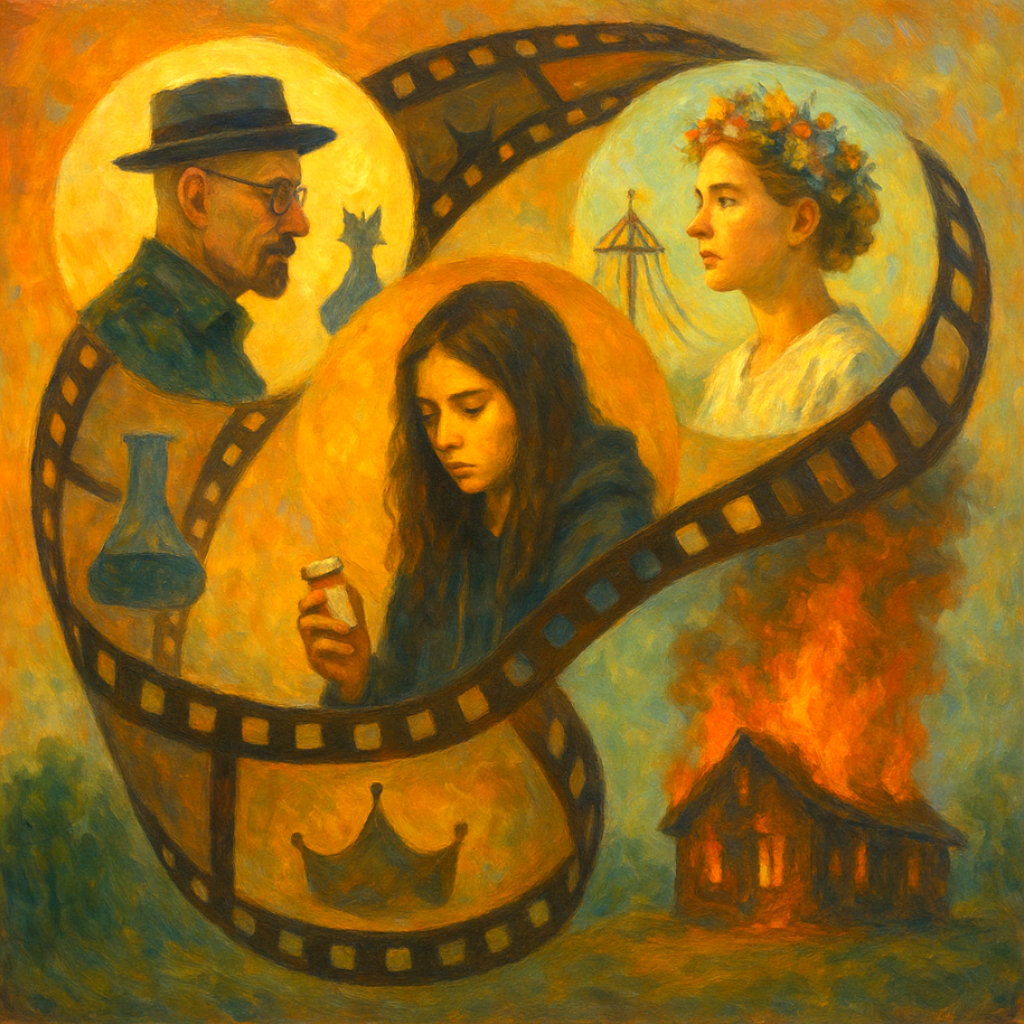
Film-strip collage of Walter White, Rue with pill bottle, and Dani in flower crown, symbolizing repetition compulsion and trauma in storytelling.
Posted inPsychological Concepts via Characters

Why Do Characters Relive Trauma? Exploring Repetition Compulsion

Ever wonder why characters in shows like 'Breaking Bad' or 'Euphoria' seem stuck in a loop, reliving the same pain over and over? This phenomenon, known as repetition compulsion, is a…
Posted by Screen Psyche October 25, 2025
A cinematic oil painting depicting three symbolic figures — a jazz drummer under harsh light, a businessman frozen before a city skyline, and a chef in a tense kitchen — representing the fear of stagnation and emotional pressure in modern storytelling.
Posted inPsychological Concepts via Characters

The Fear of Stagnation: Analyzing Its Cultural and Psychological Significance in Modern Storytelling

Stagnation and Its Thematic Relevance Stagnation, often characterized by a lack of progress, development, or change, holds a significant place in modern storytelling. As the pace of contemporary life accelerates,…
Posted by Screen Psyche October 22, 2025
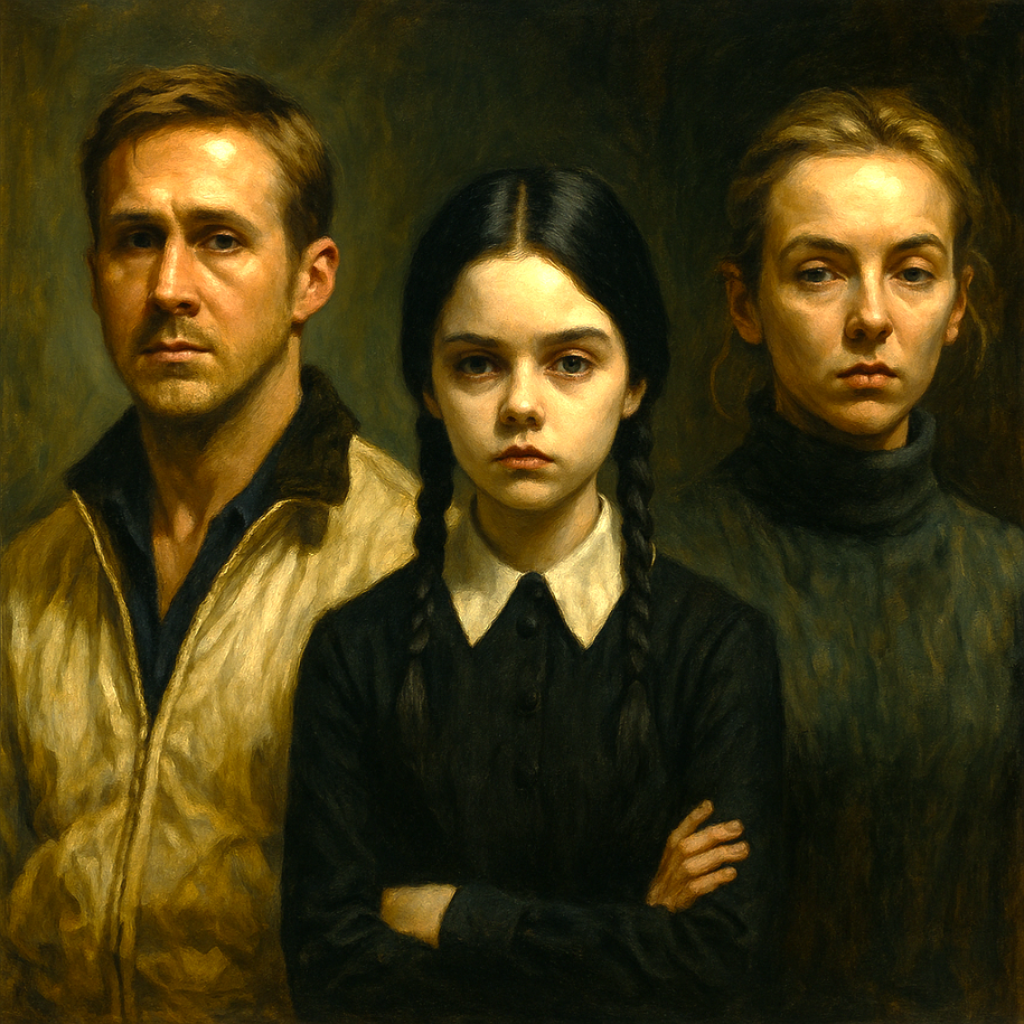
An oil painting depicting three emotionally detached figures — a quiet driver in a dim city, a pale girl with braids staring blankly, and a stylish woman with a cold smile — rendered in muted colors and soft light to symbolize isolation and introspection.
Posted inPsychological Concepts via Characters

The Psychology of Detachment: Why Some Characters Feel Too Little, Not Too Much

Introduction to Emotional Detachment in Characters In the worlds of film and television, numerous characters embody emotional detachment, provoking various responses from audiences. Emotional detachment is characterized by a lack…
Posted by Screen Psyche October 19, 2025
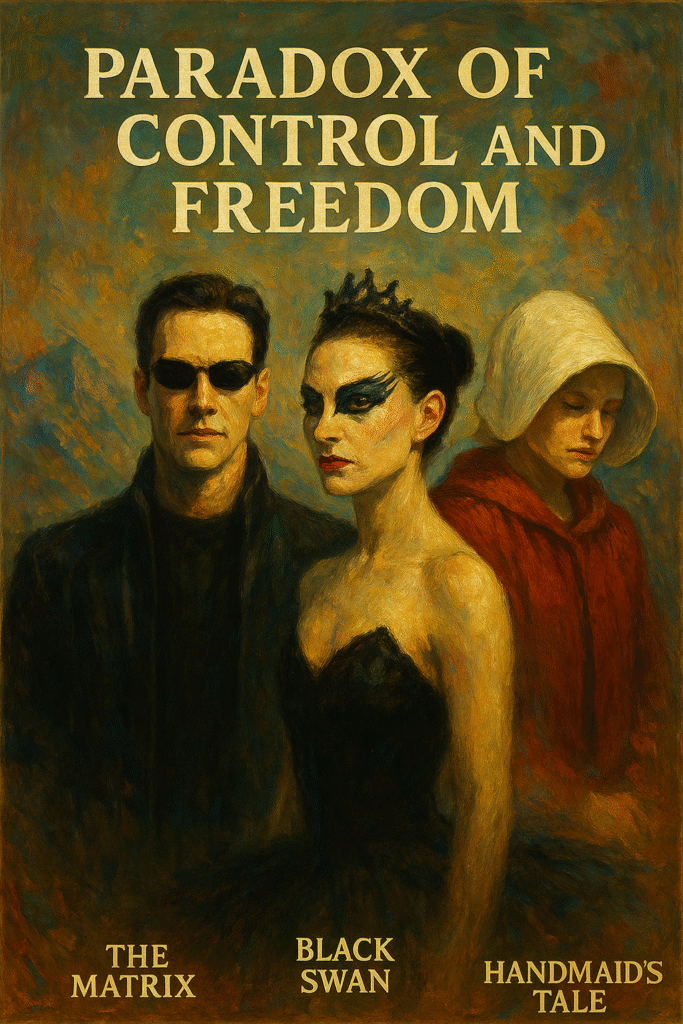
An oil painting symbolizing the paradox of control and freedom, featuring a ballerina between light and shadow, a woman in a red cloak walking toward an open door, and a figure choosing between mechanical and organic paths, inspired by The Matrix, Black Swan, and The Handmaid’s Tale.
Posted inPsychological Concepts via Characters

The Paradox of Control and Freedom

In the spectrum of human experience, the dichotomy of freedom and control presents a fascinating psychological landscape, especially when explored through media narratives. Characters offered the opportunity to break free…
Posted by Screen Psyche October 16, 2025
An impressionistic oil painting showing a diverse group of people from different backgrounds gathered in a warm living room, sharing laughter and closeness, representing the concept of found families and the psychology of belonging.
Posted inPsychological Concepts via Characters

The Psychology of Found Families in Media

Introduction to Found Families and Their Significance in Psychology At its core, the concept of a found family represents an alternative idea of kinship that transcends biological connections. Derived from the notion…
Posted by Screen Psyche October 13, 2025
A realistic oil painting of an adult sitting in a daylight-filled apartment surrounded by childhood objects like toys and comics, symbolizing the emotional struggle of the Peter Pan Syndrome — the refusal to grow up.
Posted inPsychological Concepts via Characters

Understanding the Peter Pan Syndrome: Characters Who Refuse to Grow Up

Definition and Explanation of the Peter Pan Syndrome The term Peter Pan Syndrome refers to a psychological condition wherein an adult has not grown up and exhibits childlike behavior and attitudes. Coined…
Posted by Screen Psyche October 9, 2025
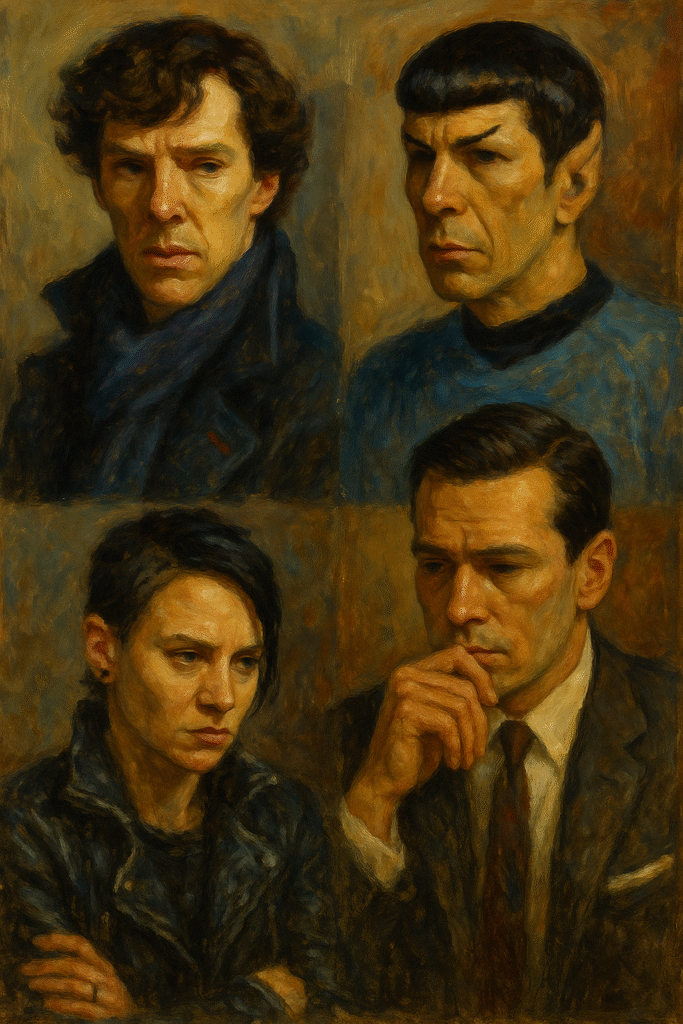
An oil painting depicting four outsider characters from film and television, each representing different forms of alienation and belonging, painted in a cinematic, semi-realistic style.
Posted inPsychological Concepts via Characters

The Outsider Archetype: Exploring Belonging, Alienation, and Creative Power in Media

Introduction to the Outsider Archetype The outsider archetype is a prominent motif in literature, film, and television, representing characters who exist on the fringes of society. These individuals often struggle…
Posted by Screen Psyche October 6, 2025
Semi-realistic oil painting of a powerful woman in abstract tones, symbolizing femininity, control, and the psychological cost of power in media narratives.
Posted inPsychological Concepts via Characters

The Overpowering Feminine: Control, Masculine Energy, and the Cost of Power

Introduction to the Topic and Its Relevance in Media In contemporary media, the representation of women has experienced a transformative shift. The portrayal of powerful female characters often leads to…
Posted by Screen Psyche October 3, 2025

Posts pagination

Previous page 1 2 3 4 5 … 8 Next page

Recent Posts

  • Schema Clash: When Old Beliefs Break in New Worlds
  • Love, Safety, and the Illusion of Rescue: Alex in Maid
  • Don’t Worry Darling; Love, Control, and the Fear of Being Ordinary
  • When Saying Yes Erases You: Boundary Porosity In Relationships
  • J.D. in Scrubs: The Comfort of Fantasy in an Uncertain Identity

Recent Comments

  1. Love, Safety, and the Illusion of Rescue: Alex in Maid on The Trauma Bond: Why Characters Stay in Toxic Relationships
  2. Don’t Worry Darling; Love, Control, and the Fear of Being Ordinary on The Trauma Bond: Why Characters Stay in Toxic Relationships
  3. Ruth Langmore Loyalty And Rage In Ozark on The Trauma Bond: Why Characters Stay in Toxic Relationships
  4. Wearing The Mask: Study Of The False Self - screenpsyche.com on Identity and Reality in ‘The Truman Show’
  5. Killing Eve Themes: From Civilian To Dangerous - screenpsyche.com on The Trauma Bond: Why Characters Stay in Toxic Relationships

Archives

  • May 2026
  • April 2026
  • March 2026
  • February 2026
  • January 2026
  • December 2025
  • November 2025
  • October 2025
  • September 2025
  • August 2025
  • July 2025

Categories

  • Film Character Analysis
  • Psychological Concepts via Characters
  • TV Character Analysis
Search
Categories
  • Film Character Analysis
  • Psychological Concepts via Characters
  • TV Character Analysis
Archives
  • May 2026
  • April 2026
  • March 2026
  • February 2026
  • January 2026
  • December 2025
  • November 2025
  • October 2025
  • September 2025
  • August 2025
  • July 2025
Copyright 2026 — screenpsyche.com. All rights reserved. Bloghash WordPress Theme
Scroll to Top